Dynamic Master Plan for the Patrick Henry Village presented / Citizen participation from 9 December onwards
A central park with a lake in the centre, diversity in architecture and in the use of buildings, energy production directly in the neighbourhood, a ring road, large neighbourhood garages, the public space free of parking spaces - these are just a few aspects of the dynamic master plan for the Patrick Henry Village (PHV). Heidelberg's largest conversion area will develop into the 16th district in the coming years. Representatives of the city and the International Building Exhibition (IBA) Heidelberg presented the plan at a press conference on the almost 100-hectare site. Online public participation will run from Monday, 9 December 2019 to Wednesday, 15 January 2020. From Wednesday, 11 December 2019, the master plan will also be discussed in the municipal council.
The European city in the 21st century
"We see Patrick-Henry-Village as a mixed-use district - a sustainable, modern and urban place to live and work in every respect. Patrick-Henry-Village should show how we transfer the old ideal image of the European city into the 21st century. We want short distances in the neighbourhood, a forward-looking and climate-friendly energy and transport concept as well as attractive and green open spaces," explains First Mayor Jürgen Odszuck. For Conversion Mayor Hans-Jürgen Heiß the dynamic master plan is a good basis for this: "The plan leaves us enough flexibility to be able to react situationally in the coming years of development. The scale alone of almost 100 hectares is unique for Heidelberg - many challenges and enormous opportunities await us," says Heiß.
The IBA Heidelberg helped shape the planning process from the very beginning. Executive Director Prof. Michael Braum highlights the city's courage in taking on the quality offensive of an International Building Exhibition in PHV: "IBAs are an urban planning excellence format - their projects go far beyond the usual standards. Meeting this high quality standard for an entire city district is a complex and demanding task. We look forward to continuing to accompany the city of Heidelberg in this endeavour."
Dynamic master plan in keywords
Uses: The district is to become a place of residence for about 10,000 people and a place of work for about 5,000. In principle, there will also be a mix of uses. The main residential areas are in the centre, in the north and on the western edge of the district. There will be offers for all population groups in all stages of life, with a focus on young, urban-oriented families. In the east - towards the 5 motorway - the focus is on different workplaces ranging from the sciences to craft businesses and urban manufactories, including digitalised logistics, as well as start-ups. Patrick Henry Village will also provide innovative forms for collaborative working. In the south of the area, the focus will be on education, sports, culture and creative industries. In the heart of the area, an open and experimental neighbourhood centre is planned - several more such "innovation anchors" are to be established in the area.
Architecture: New and existing buildings are to be mixed in the new district. For example, the former officers' villas in the north of the area and some of the characteristic terraced buildings in the centre are to be preserved. The new buildings will be designed in a variety of shapes. The mixing of the district is to find visual expression in a diverse architecture. Experiments are to be initiated that deal with cost-effective, energy-efficient and space-saving building and living.
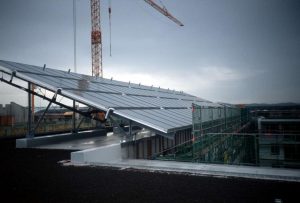
Energy: The energy concept of the new district wants to learn from the experiences of Bahnstadt and take into account the fight against climate change. Accordingly, the energy required is to be produced as far as possible within the district in decentralised structures - for example via solar collectors. At the same time, energy consumption is to be kept as low as possible at all levels, whereby at the building level, production ("grey energy") and operation over a period of 50 years are also to be taken into account in the balancing.
Traffic: The new district will be a model project of the transport turnaround, where sustainable mobility is lived. From the first development measure onwards, environmentally friendly mobility will be ensured. In addition to an ambitious regional integration of PHV into the environmental network, the focus within PHV is on promoting mobility behaviour on foot, by bicycle and by local public transport. The central access axis in the district will be a ring road that connects the different neighbourhoods and open spaces and creates a city of short distances. The street system is planned without parking spaces. All plots are accessible by car, but parking will be in the separately accessible neighbourhood garages at the entrances to the district. As in the neighbourhood garages, sustainable mobility services such as rental bicycles, cargo bikes, etc. will also be available at the neighbourhood level in individual mobility stations.
Open spaces: A productive urban landscape is envisaged for PHV. Near-natural open spaces serve not only nature conservation or play and leisure uses, but also especially productive aspects such as food and energy production and water management. Essential spatial components of the open space concept are:
- The "Green Heart" is a ribbon that runs through the centre of the neighbourhood. At its centre is a park with a lake to the south of the former officers' mess, which opens up to the new centre of the PHV.
- The "green fingers" form a diverse network of open spaces consisting of gardens, near-natural areas, playgrounds and communal areas, and at the same time provide the necessary fresh air corridors in the east-west direction as well as biotope and path networks in the landscape.
- An edge to the west represents the transition to the adjacent agricultural landscape. The area includes local recreation, private gardens, nature conservation and various types of food production.
Digital services: The opportunities of digitalisation should be considered from the very beginning of the development process. Of course, complex requirements with regard to data protection and data self-determination must be taken into account. In principle, digitisation is not only about continuous broadband coverage of the area. In the future, PHV will offer a wide range of services on topics such as media/energy supply, mobility/neighbourhood garages and social coexistence (sharing). The services are to be bundled in a joint operator/quarter company and provided primarily via digital channels. For this purpose, there should also be a contact point in the neighbourhood right from the start.
Source: PM from 5.12.2019 of the IBA Heidelberg
Keywords:
Stock, Bike-/Velo-City, DE-News, IBA, Barracks conversion, News Blog Baden-Württemberg, Mix of uses, Quarters


 Ecostation
 SA student dormitory Kaiserslautern
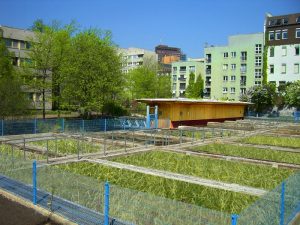 IBA Block 6
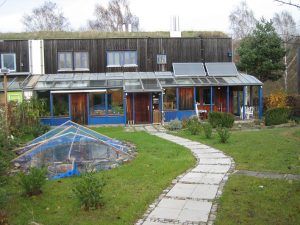 Frasenweg" housing estate
 Signal box 60 Cologne-Nippes
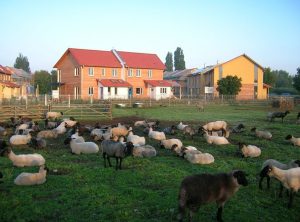 m round
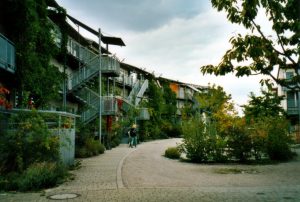 Ecological settlement Geroldsäcker Karlsruhe