Lecture by Richard Sennett and Saskia Sassen (2016)
Published
Lecture by Richard Sennett and Saskia Sassen on 9 June 2016 at the Oskar von Miller Forum (International Meeting Centre of the Bavarian Construction Industry) in Munich.
From the press release of the lecture announcement: "Richard Sennett and Saskia Sassen examine the way in which modern society is evolving - to use the words of the Swiss historian Jacob Burckhardt - towards a state of "brutal simplicity" in which clear distinctions are made between winners and losers, religious beliefs, natives and strangers. Contrast this with the idea of the "open city," which promotes an opening up of the city in terms of a complex interplay of politics, social life, and culture."
One third of homeowners plan to install in the next twelve months
High electricity prices fuel demand for cheap solar energy
Online survey of 1,000 people - representative survey by age and gender
Germany is increasingly becoming a solar country: this is shown by the Solarwatt Market Study 2023, which the Hamburg-based opinion research institute Appinio conducted in March on behalf of the leading photovoltaic provider. According to the study, 84 percent of homeowners in Germany already have their own photovoltaic system or want to purchase one to generate clean solar energy. Solarwatt conducted the market study for the second time this year after 2022. For the representative survey by age and gender, a total of 1,000 German homeowners were surveyed online in the period from 7 to 14 March 2023.
One third of homeowners plan solar installation in the next twelve months
Just under a third of homeowners who do not currently use solar power are even planning to install a system in the next twelve months (31.8 percent). In the context of the first Solarwatt market study in March 2022, around 25 percent of those surveyed still stated that they wanted to install their own photovoltaic system in the next twelve months. A photovoltaic system (18.2 percent) is already installed in around one fifth of single-family homes in Germany. In 2022, the share was still 14.6 percent, which corresponds to an increase of only 3.6 percent in the past twelve months.
The Solarwatt Market Study 2023 also shows that the main motive for German homeowners to buy a photovoltaic system is currently the potential to save on energy costs (68.2 percent), followed by the desire for more independence from the energy market (61.8 percent) and the desire to do something good for the environment (43.8 percent). "A ten-kilowatt-peak solar system consisting of durable glass-glass solar modules generates clean energy for around ten cents per kilowatt hour from the moment it is installed - and for more than thirty years," explains Solarwatt managing director Detlef Neuhaus. With such a system, homeowners could save tens of thousands of euros over the entire period.
Solar expansion: industry, politics and investors join forces
According to Neuhaus, the Solarwatt Market Study 2023 confirms the population's sustained desire for solar power: "The use of a solar system makes absolute sense for homeowners from an economic and ecological perspective. Moreover, the technology is now fully mature. But if we want to keep and build up the added value here in Germany and Europe in the future, we need a solidarity between industry, politics and investors. Only in this way can we establish a strong solar industry on the old continent in the long term." Solarwatt is one of the pioneers and innovation drivers of the European solar industry with 30 years of experience. In the meantime, every fifth solar system up to ten kilowatt peak in Germany comes from Solarwatt.
Convincing concept from Freiburg engineers: the cargo bike trailer reacts via a sensor to the movements of the leading person and supports with an electric motor when driving or braking. Carla Cargo is approved for a load of up to 150 kg. In the video you can see how Carla Cargo works.
Environment Minister Heinen-Esser: "The protection of the starry night sky serves health, species and climate protection and enables fascinating nature experiences at night".
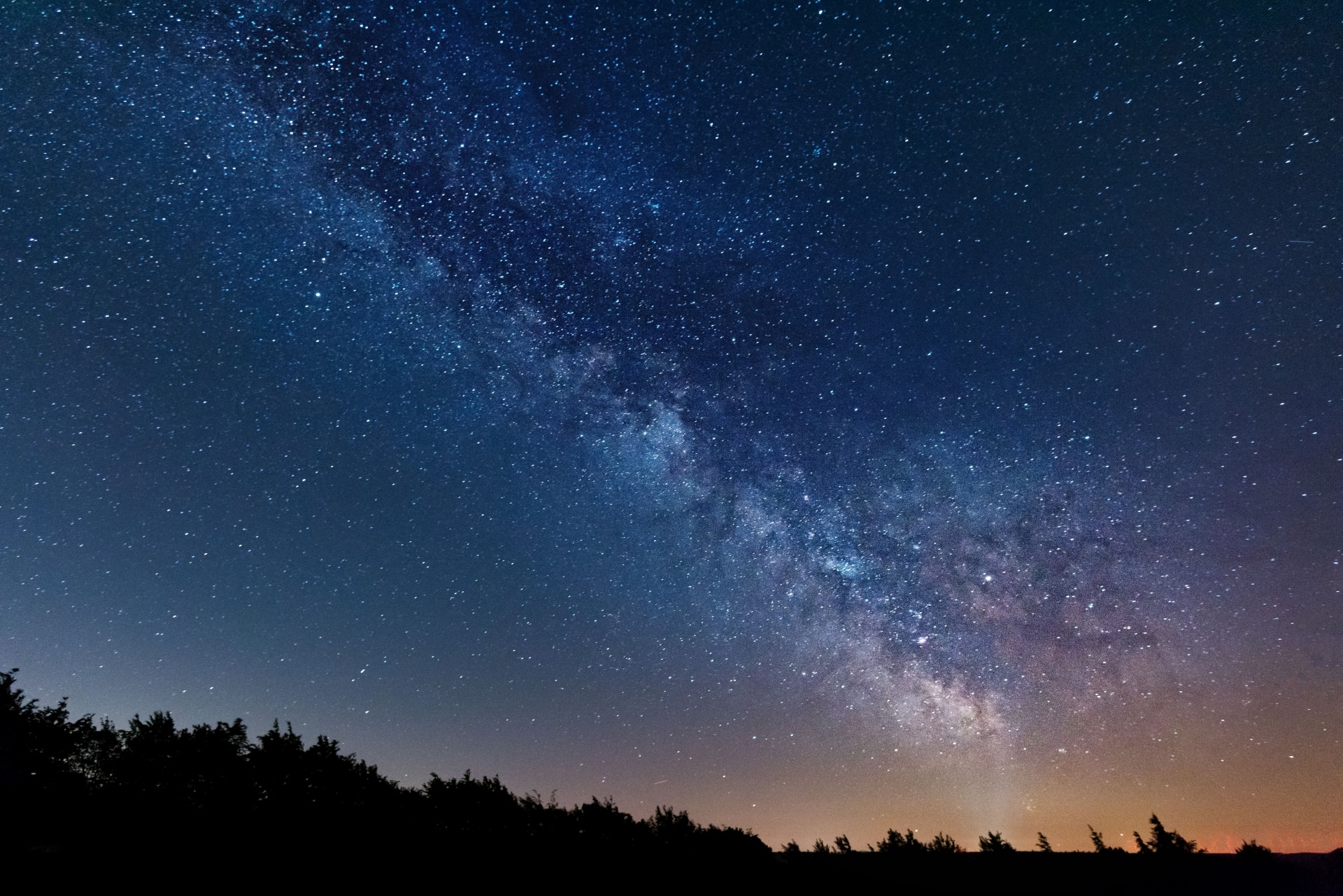
A fascinating natural spectacle: The Eifel National Park is one of few places in Germany where you can see the Milky Way with your naked eyes. Now the International Star Park Eifel National Park has received the final and so far unique recognition in western Germany. (Photo: Maximilian Kaiser)
Schleiden-Gemünd / Nettersheim, 05.04.2019. Experiencing the starry sky at night with twinkling celestial bodies is a special experience for many people that is now only possible in a few places in Germany - one of these places is the Eifel National Park. Since 2010, a regional initiative has been successfully campaigning for the protection of the night sky and the preservation of the natural night landscape - in 2014, this was followed by the provisional designation as the first "International Dark Sky Park" in Germany. Now this initiative can look forward to the final recognition as International Star Park Eifel National Park. On the grounds of the observatory of the astronomy workshop "Stars without Borders" in the Eifel National Park, Dr. Andreas Hänel, highest representative of the International Dark Sky Association (IDA) in Germany, presented the certificate of recognition to Environment Minister Ursula Heinen-Esser and the head of the Eifel National Park Administration Dr. Michael Röös. The distinction of being a protected area of the International Dark Sky Association (IDA) is a title that only a few regions worldwide can use to promote themselves, in Germany there are only four. For the Eifel National Park, which turned 15 this year, this recognition is a nice "birthday present".
The Eifel National Park is a refuge of undisturbed night skies and has been recognised as a star park since 2014. "Rarely does a topic offer so many win-win situations," said Environment Minister Ursula Heinen-Esser when handing over the certificate. She emphasised the many benefits of protecting the starry night sky: "Dark nights have a positive effect on health, conserve resources and thus help to protect the climate. Darkness is important for many nocturnal animal species, especially insects. Artificial light at night can be a serious threat to them." For North Rhine-Westphalia, he said, the final recognition of the Eifel National Park as the only star park in the entire western half of Germany was an outstanding honour. "The final recognition of the Eifel National Park as a star park helps to raise the profile of our state as a nature destination as well," the state environment minister summed up.
The initiative goes back to the astronomer and lighting consultant Harald Bardenhagen from Cologne, who managed to convince the region of the value of the starry sky. Initially, Bardenhagen found enthusiastic comrades-in-arms in the administration of the Eifel National Park, the district administration of Euskirchen, the national park towns of Schleiden and Heimbach, and those responsible for the Vogelsang property. However, until the final recognition as a Dark Sky Park, further efforts on different levels were necessary: In the design of the outdoor lighting to reduce the artificial light in the National Park and the directly surrounding villages or in the development of tourist offers for stargazing for the general public. The North Eifel Nature Park, in which the Eifel National Park is embedded, has also been intensively involved in this process.
Dr. Michael Röös, Head of the Eifel National Park Authority, thanked Mr. Bardenhagen for his unprecedented commitment against light pollution and his dedication to protecting the night sky and making it possible to experience it. "With the final recognition of the Eifel National Park as an International Star Park, we have reached an important milestone with the region and at the same time taken a pioneering role in the protection of darkness in North Rhine-Westphalia."
"Together we will significantly expand this unique selling point", Manfred Poth, Chairman of the North Eifel Nature Park, was pleased to say. With the innovative project application "Under the Tent of Stars - Eifel by Night", the nature park was able to prevail in the "Nature Park Competition.2021.NRW" of the NRW Ministry of the Environment and, for the first time in its history, took first place. "With the associated 400,000 euros in funding, the protection of darkness through public relations work, through educational offers of sustainable development and tourist infrastructure projects in the Eifel will experience a significant further development," explained Poth. More than 40 project partners, including the Eifel National Park Authority, want to participate in the realisation.
In his lecture, Prof. Dr. Henning Austmann addressed the need for cultural change, even beyond the culture of living and building. Technology and politics have hardly been able to achieve any significant progress - let alone the necessary success - in recent years. A rethink and a cultural change are therefore needed so that climate change does not destroy existence on earth.
The lecture recording was made in the context of the symposium "Herbstforum Altbau" in Stuttgart on 21.11.2018.
We use cookies to optimize our website and services.
Functional
Always active
Technical storage or access is strictly necessary for the legitimate purpose of enabling the use of a particular service explicitly requested by the subscriber or user or for the sole purpose of carrying out the transmission of a communication over an electronic communications network.
Preferences
The technical storage or access is necessary for the legitimate purpose of storing preferences that have not been requested by the subscriber or user.
Statistics
The technical storage or access, which is solely for statistical purposes.Technical storage or access used solely for anonymous statistical purposes. Without a subpoena, voluntary consent from your Internet service provider, or additional records from third parties, information stored or accessed for this purpose cannot generally be used alone to identify you.
Marketing
Technical storage or access is necessary to create user profiles, to send advertising or to track the user on a website or across multiple websites for similar marketing purposes.