Min. 4:56; Video from 18.02.2020; Ed.: GBG Mannheim
Project Info: http://sdg21.eu/db/quartier-franklin-in-mannheim
Keywords: Movies, Movies 4 to 10 Min, Barracks conversion, News Blog Baden-Württemberg
Min. 4:56; Video from 18.02.2020; Ed.: GBG Mannheim
Project Info: http://sdg21.eu/db/quartier-franklin-in-mannheim
Many new projects, new photo galleries or new individual project photos have been added to the web database www.siedlungen.eu in 2018. The following is an overview.
Living at the Dantebad
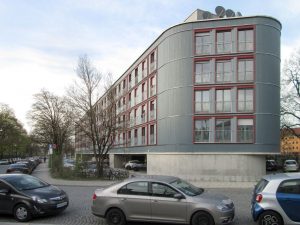
Project link: http://sdg21.eu/db/wohnen-am-dantebad
Directly to the photo gallery:
https://siedlungen.eu/galerien/fotogalerie-2018-wohnen-am-dantebad
Many thanks to Johann Hartl for the photos!
There are five new photo galleries from the Lake Constance region in May. On behalf of the users of this website, I would like to thank Thomas Pommer!
Wooden student residence in Constance
Project link: http://sdg21.eu/db/studierendenwohnheim-in-holzbauweise
Lichtblick-COOP in Leutkirch im Allgäu
Project link: http://sdg21.eu/db/coop-leutkirch
Biosolar residential complex Ravensburg-Eichwiesen
 Project link: http://sdg21.eu/db/biosolare-wohnanlage-ravensburg-eichwiesen
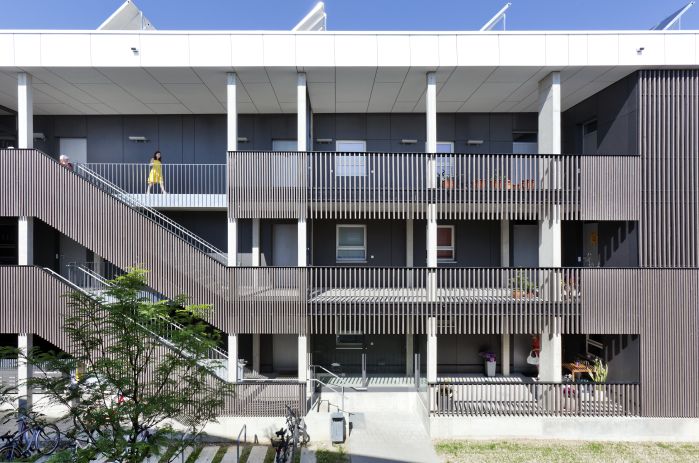
Wooden housing estate Ingolstadt
http://sdg21.eu/db/holzbausiedlung-ingolstadt

Wooden housing estate with 213 units in Berlin Weißensee
http://sdg21.eu/db/weissensee
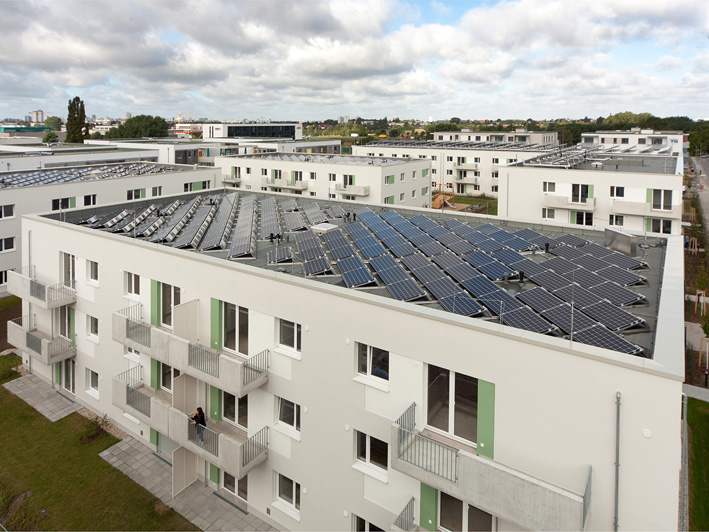
Climate-neutral home for 128 tenants in Berlin-Adlershof
Project Info: http://sdg21.eu/db/plusenergiehaeuser-in-berlin-adlershof
Many thanks to Deimel Oelschläger Architekten, Berlin for the rights to use the illustration.
Active townhouse in Frankfurt
Project link:
http://sdg21.eu/db/aktiv-stadthaus-in-frankfurt
The largest PV housing estate in Germany

825 kWp in Gelsenkirchen- Schaffrath
Project link:
http://sdg21.eu/db/die-groesste-pv-wohnsiedlung-deutschlands
Addition to Nordstadt Karlsruhe
With 526 residential units, the two-storey extensions in timber frame construction are the largest contiguous timber construction project in a housing estate in Europe in the last 40 years
Photo: Bernhard Mangold-Märkel
Project link:
http://sdg21.eu/db/aufstockung-nordstadt-karlsruhe
Ellener Hof Foundation Village in Bremen: Ecologically Built - Colourfully Mixed
Project link:
http://sdg21.eu/db/stiftungsdorf-ellener-hof-oekologisch-gebaut-bunt-gemischt
The country lists with more than 10 projects can now be filtered according to further criteria. The projects can now be displayed according to other criteria in addition to the postcode sorting:
https://siedlungen.eu/projekte/baden-wuerttemberg
https://siedlungen.eu/projekte/nrw
https://siedlungen.eu/projekte/bayern
https://siedlungen.eu/projekte/schleswig-holstein
https://siedlungen.eu/projekte/berlin
https://siedlungen.eu/projekte/hamburg
Also in category "Projects in development"There are now further options for narrowing down the project list.
Data protection according to the EU DSGVO
In addition, data protection was reviewed. The website was already EU GDPR compliant in most areas. However, some plugins were uninstalled and replaced or a few functions were deactivated for which it is not obvious whether they are GDPR-compliant. Read here the extended Privacy policy.
Keywords:
sdg21 news
 Now that almost all of the 570 apartments in Germany's largest timber housing estate in Prinz-Eugen-Park have been occupied, the Munich planning committee has recommended the implementation of the follow-up timber construction project "Kreativquartier" with 370 units.
Here are the key data:
http://sdg21.eu/db/kreativquartier
Keywords:
DE-News, Wood construction, Communities, News Blog Bavaria, Mix of uses, Quarters
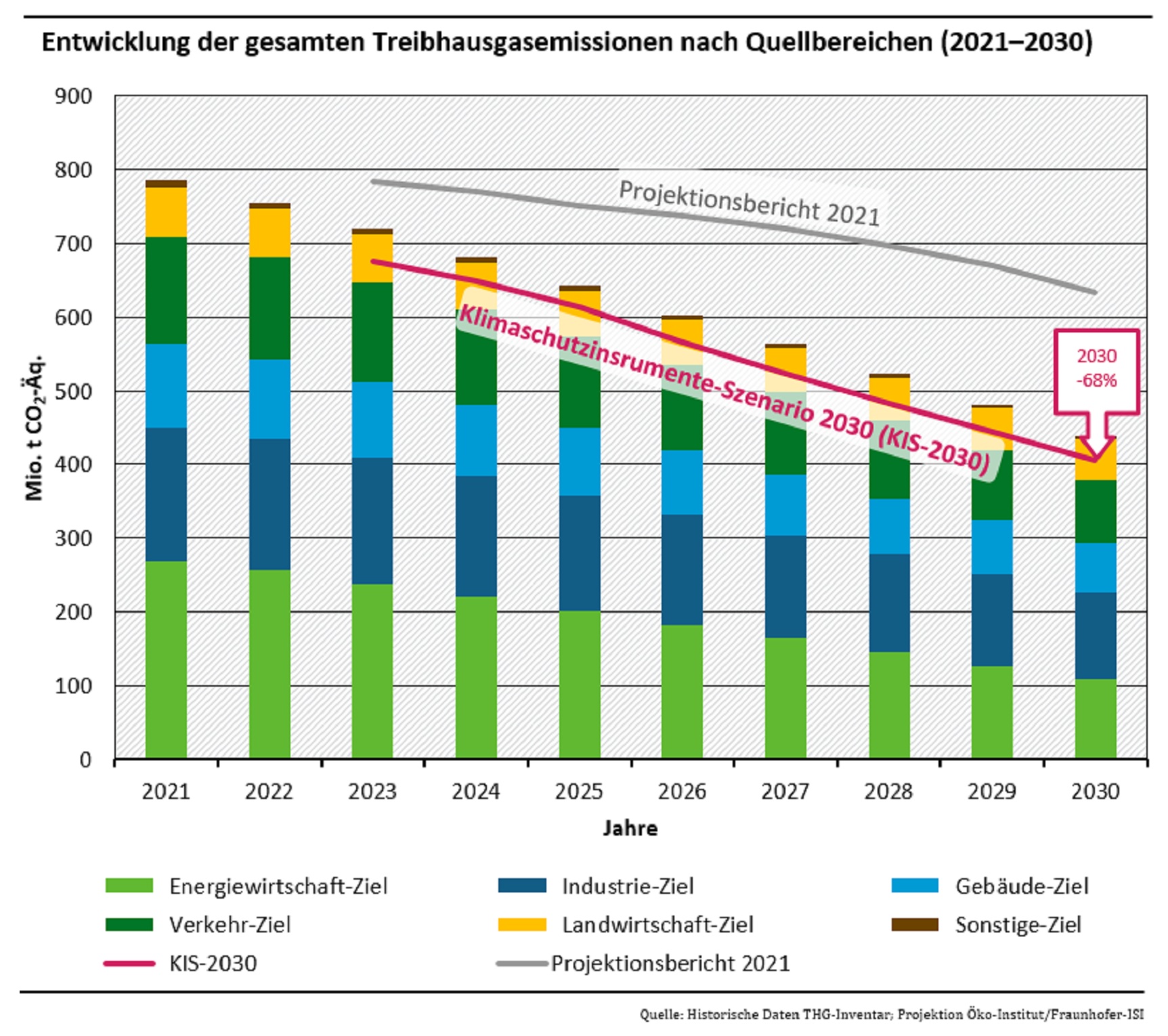 Germany can still achieve its climate targets by 2030. This is shown in a new analysis by the Federal Environment Agency (UBA). This would require, among other things, more rail transport, a reform of the motor vehicle tax and the restriction of fossil heating. In addition, all emissions would have to be priced and charged to the polluter. In the so-called Climate Protection Instruments Scenario 2030 (KIS-2030), the UBA has examined how additional emissions can be saved in the building, mobility, energy and industry sectors. "The model calculation clearly shows that we have a lot of catching up to do in some sectors," says UBA President Dirk Messner. "We now urgently need a constructive dialogue about where emissions can be reduced, otherwise we will miss the legal savings targets. We also need to talk honestly about how to cushion the financial burden on lower-income groups and distribute it more fairly. Currently, low-income households are often asked to pay disproportionately. Understandably, this does not exactly increase acceptance for more climate protection.
The German Climate Protection Act (KSG) provides for a 65 per cent reduction in climate-damaging emissions by 2030 compared to 1990. By 2040, emissions are to be reduced by 88 percent and net greenhouse gas neutrality is to be achieved in 2045. To this end, the KSG sets annual reduction targets by 2030 for the individual sectors. The latest projection report of theUBAfrom 2021 has shown that with the currently planned climate protection instruments, both the climate targets in 2030 and the annual savings targets will be missed.
UBA's cross-sectoral CIS-2030 now shows which concrete instruments the individual sectors can use to achieve their annual savings targets by 2030 after all. With price instruments, support programmes and new and stricter legal regulations, the course can be set at an early stage to achieve the legally prescribed savings.
In the transport and building sectors, for example, significantly greater efforts will be needed in the future to reduce greenhouse gas emissions in the coming years. The climate protection instruments used in the model calculation in these sectors only fulfil the minimum requirements. In the case of transport and buildings, the prescribed targets will probably not be met, even with a mix of very ambitious instruments and measures. In order to achieve the interim targets on the path to 2030, additional instruments that are effective in the short term would therefore be necessary.
At the same time, the HIS-2030 shows concrete options for action with which the sectoral climate targets can still be achieved: The measures described in theScenarioThe predominantly economic instruments modelled in the transport sector should be flanked by a comprehensive expansion of rail transport and a strengthening of the environmental network of primarily buses and trains.
The KIS-2030 is based on instruments similar to those currently under political discussion - such as mandatory municipal heating planning or the minimum efficiency standards for buildings currently under discussion at EU level. The KIS-2030 also assumes a ban on new monovalent oil (from 2023) and gas boilers (from 2025), which goes beyond the current government drafts for the Building Energy Act.
Based on the scenario, it is recommended for the industrial sector to use subsidies for CO2-and -free technologies. Support programmes should be designed in such a way that they do not lead to negative environmental effects due to incorrectly set framework conditions or incentives.
Source: UBA-PM of 3.7.2023
Keywords:
CO2-neutral, DE-News, Renewable, Climate emergency, Climate protection, New books and studies, SDG 2030, Solar thermal, Environmental policy
In November last year, the property industry associations put their involvement in the Alliance for Affordable Housing and Construction on hold.
To the PM from 15 March 2017:
www.bmub.bund.de/pressemitteilung/alle-partner-im-buendnis-fuer-bezahlbares-wohnen-und-bauen-setzen-zusammenarbeit-fort
Keywords:
Housing policy