17:10 min, talk by Andrew Waugh in March 2020.
Keywords: Movies, Movies 11 to 45 Min, Wood construction, Climate protection, News Blog Great Britain, Resource efficiency, Transition Town, Life cycle assessment

17:10 min, talk by Andrew Waugh in March 2020.
19:09 min, Published on: 18.11.2020
Dwindling raw materials, dwindling landfill space and ambitious climate protection targets make it essential to overcome the high use of resources in the construction industry. The film shows that there are already many ways to use building materials sustainably in the cycle: Recycled concrete, recycled gypsum, the reuse and recycling of bricks and the renewable raw material wood.
Around 60 percent of the resources used in Berlin are processed in the construction industry. This contrasts with millions of tonnes of building rubble and construction site waste. Every year, 2.2 million tons of primary raw materials are already saved in civil engineering and building construction in Berlin through the use of quality-assured secondary raw materials. But Berlin does not intend to stop there. By 2030, a further 1.4 million tonnes of primary materials are to be replaced by secondary raw materials each year.
Video: Gretchen Agency GmbH/EUMB Pöschk GmbH & Co. KG/Ute Czylwik
Publisher: Senate Department for the Environment, Transport and Climate Protection
Keywords:
Building materials / Construction, DE-News, Movies, Movies 11 to 45 Min, Wood construction, Communities, News Blog Berlin, Recycling, Resource efficiency
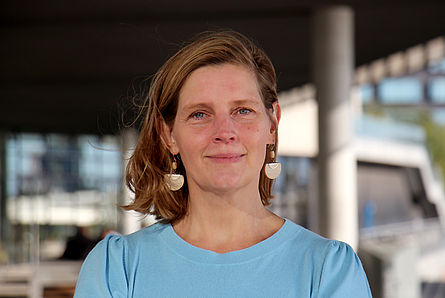
Dr. Kirsten David, a researcher at HafenCity University (HCU) Hamburg, has developed an innovative method for determining rent increases after energy efficiency measures: By means of functional cost splitting, rent increases become appropriate and comprehensible. The planning of the energetic measures is also ecologically optimized. For her dissertation entitled "Functional Cost Splitting for the Determination of Rent Increases after Energy Efficiency Measures", the scientist today receives the "BUND Research Award 2020". With the research award, the Bund für Umwelt- und Naturschutz (BUND) honors scientific work on sustainable development.
Rent increases due to energy-efficient building modernisation are legally permissible and politically desired as an investment incentive. After all, according to the German Energy Agency (dena), around 35% of Germany's total energy consumption is attributable to the building sector. An increase in the renovation rate is therefore necessary from a climate policy perspective.
However, while the legislators assume that such measures can be implemented economically and without affecting the rent, the experience of many tenants is different: Often the rent increases exceed the saved heating and energy costs many times over. In extreme cases, tenants can no longer afford their apartments. "To this day, energy-efficient building refurbishment has a reputation as a gentrification tool," says David. With the method she developed to determine appropriate rent increases, the 45-year-old scientist also wants to contribute to an increased social acceptance of corresponding measures.
"The basis of the politically expected increase amounts is the so-called coupling principle," explains the architect. "Like the Energy Saving Ordinance, it assumes that energy efficiency measures will always be implemented when a comprehensive refurbishment is due anyway. The sticking point: only the modernization costs entitle landlords* to rent increases, but not the costs for the renovation. The latter must be deducted from the total investment sum as "anyway costs". Eight percent of the remaining costs can be passed on to the tenants as a modernisation charge.
"The current regulation is insufficient. In practice, there are manifold demarcation problems between modernisation costs relevant to rent increases and maintenance costs not relevant to rent increases," says David. The method she developed, on the other hand, focuses on the climate-relevant improvement of each individual building component compared to its condition before the construction measure. "Functional cost splitting thus corresponds to the actual basic idea of the legislators, is practicable and enables an appropriate and comprehensible allocation to modernisation or refurbishment costs," says David.
According to the scientist, her approach leads to the omission of measures that are nonsensical from a structural engineering point of view and do not bring about any climate-relevant improvement of the building components: "With my method, such measures are not relevant for rent increases and are therefore uneconomical for landlords. In addition, your calculation method ensures that the modernization levy actually approaches the level of the ancillary cost savings as a rule. The award winner is therefore particularly pleased that the sustainability aspect of her work has been recognised with the BUND Research Award: "Rental housing stock can only be developed sustainably if ecological, economic and social aspects are given equal consideration. Functional cost splitting makes a significant contribution to this."
This year, the BUND Research Award will be presented at a virtual conference. Among other things, keynote speaker and environmental scientist Ernst Ulrich von Weizsäcker will discuss with the three award winners how science can develop more relevance and effectiveness for sustainability goals. The transfer into practice is also an important concern for David. Her next goal is to further develop functional cost splitting into an instrument that can also be understood by laypersons - preferably as an online tool.
Personal details:
Kirsten David is a guest researcher at HCU in the subject areas "Design and Analysis of Structures" with Prof. Dr.-Ing. Annette Bögle and "Construction Economics" with Prof. Dipl.-Ing. Reinhold Johrendt as well as a lecturer in the interdisciplinary study programmes. Her doctoral thesis was supervised by Prof. Dipl.-Ing. Reinhold Johrendt and Prof. Dr.-Ing. Thomas Krüger, (subject area "Project Management and Project Development in Urban Planning") and is freely available:
https://edoc.sub.uni-hamburg.de//hcu/volltexte/2019/508/.
David runs the homepage
www.funktionales-kostensplitting.de
and tweets on topics such as rents, housing and sustainability.
https://twitter.com/DrKirstenDavid1
Keywords:
Construction and operating costs, Stock, DE-News, Research, Climate protection, New books and studies, Contests & Prizes
More climate protection with the renewable raw material wood. Timber construction in Freiburg is an important instrument in climate protection and indispensable for achieving the city's ambitious climate protection targets. Timber construction can make an effective contribution to reducing CO2 emissions.
For this reason, Environment Mayor Gerda Stuchlik and Building Mayor Martin Haag are today presenting the new timber construction guide and the planned timber construction funding programme, which will be presented to the municipal council for approval at its meeting on 22 October. "18 years after the introduction of the successful "Energy-conscious refurbishment" funding programme, the city is launching another municipal funding programme for more climate protection and sustainability in the building sector with the timber construction funding programme," explains Environment Mayor Gerda Stuchlik. And Building Mayor Martin Haag: "Timber buildings are not only traditional buildings, but also innovative buildings that harbour great potential. For this reason, I am certain that our timber construction funding programme will provide a massive boost, especially in Freiburg's residential construction sector."
The wood that grows and is harvested in the city forest and also in the region can be used in many ways in the construction sector. Wood can easily be used instead of energy and resource-intensive materials such as concrete, steel or aluminium.
Freiburg's municipal forest and the utilisation and use of its wood reduce the carbon footprint by binding, storing and avoiding carbon dioxide. This means that a total of over 2 million tonnes of carbon dioxide can be stored or avoided by 2050. For this reason, the city council wants to further promote the use of wood in the construction sector. In 2017, the municipal council commissioned the administration to launch a municipal timber construction promotion programme and to create a timber construction guide, which presents already completed and pioneering timber construction projects in the city district.
Both building blocks are now available, the new timber construction guide and the planned timber construction support programme
The new timber construction guide presents 29 already realised and pioneering timber construction projects in Freiburg. The innovative buildings are intended to inspire and convince interested clients, project organisers, architects, planners and students to take a closer look at timber construction and discover its aesthetics, cost-effectiveness and potential for climate protection and ultimately implement it in their own projects.
pdf-Download Timber Construction Guide (10 MB)
The projects for the timber construction guide were selected by a jury of representatives from the Chamber of Architects, the Architecture Forum, a timber construction engineer, the forestry office and proHolz Schwarzwald. The variety of projects, from the canteen of the Loretto School to the extension of the Breisacher Hof in the city centre, shows how great the potential of timber construction is. From the summit of Schauinsland, where the observation tower and the radionuclide station are two pioneering timber construction projects for their time, to the residential homes in modular timber construction in Merzhauser Strasse and Höllentalstrasse, the projects spread across Freiburg show that even extremely demanding structural challenges can be solved using timber construction.
The timber construction guide not only explains technical details, but in addition to planners and builders, the residents and users of the selected buildings were also asked about their experiences. The timber construction guide was produced in collaboration with proHolz Schwarzwald.
"It is an important signal that the city of Freiburg, with its pioneering role in climate protection and sustainability, is increasingly focusing on timber construction and setting up a municipal funding programme. This strengthens craftsmanship and the timber construction industry in the region as well as sustainable forest management and thus climate protection and regional value creation beyond the city limits," explains Michael Hafner from proHolz Schwarzwald.
The planned timber construction funding programme, for which around 300,000 euros in funding will be available in 2020, which will be partly financed from climate protection funds from the concession fee, is intended to realise even more timber buildings in the future, especially in residential construction in Freiburg.
Builders and planners are currently increasingly discovering the possibilities and designing pioneering timber buildings or timber hybrid buildings. With the amendment to the state building regulations that came into force on 1 August 2019, the state government has made a further contribution to facilitating the use of wood and putting wood on an equal footing with other building materials in Baden-Württemberg.
However, the city wants to promote the use of wood not only for design reasons, but above all for ecological reasons. The city's timber construction programme consists of three components: The financial promotion of timber construction, the timber construction prize and the promotion and support through advice, networking and advertising of timber construction. The city has already created an additional half-time architect position for this purpose, which is based at the Building Law Office and starts work on 1 December.
The city wants to promote specific timber construction projects with the planned timber construction funding programme. The aim is to bind as much CO2 as possible in the long term in order to counteract climate change. The new programme is also intended to promote residential construction projects with four or more residential units as well as additional living space in existing buildings through extensions. The funding programme has easy-to-understand criteria so that there is as much time as possible to advise those wishing to build. Funding is based on the mass of the building.
The second component of the timber construction programme is the awarding of a timber construction prize. The aim of the prize is to highlight individual buildings in Freiburg and thus present building with wood to a wider public. The city's timber construction prize will be awarded for the first time in early 2021 for buildings completed in 2019 and 2020.
In addition to the new funding programme and the future timber construction prize, the timber construction funding office in the Building Law Office will advise interested parties and organise consultations in future.
Keywords:
Building materials / Construction, DE-News, Funding, Wood construction, Climate protection, Communities, NaWaRohs, Sustainable management, News Blog Baden-Württemberg, Quarters, Settlements, Housing, Housing policy, Life cycle assessment, Ecology
The Federal Cabinet has adopted the Climate Protection Plan 2050 presented by Federal Environment Minister Barbara Hendricks (SPD) by circular resolution. It is based on the guiding principle of largely neutral greenhouse gas emissions by the middle of the century. For the year 2030, it confirms the overall target of a greenhouse gas reduction of at least 55 percent compared to 1990. At the same time, this overall target is broken down to individual sectors for the first time. The plan thus provides clear orientation for all sectors.
Link
www.bmub.bund.de/...klimaschutzplan_2050_bf.pdf
Keywords:
Climate protection, New books and studies, Environmental policy