The Climate Action Programme 2030 presented by the Climate Cabinet on 20 September 2019 also includes new rules for the heating supply of buildings. One measure is the replacement premium for old oil and gas heating systems. According to the information programme sponsored by the Baden-Württemberg Ministry of the Environment, this is the state's way of The future of old buildings will cover up to 40 % of the costs if a more climate-friendly system with a proportion of renewable energy is used when a boiler is replaced. The installation of oil-only heating systems is to be completely banned from 2026.
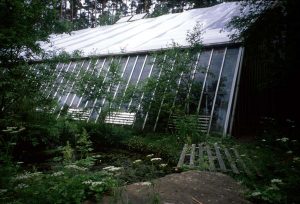
With the Sustainable Small House Building (BNK) quality seal, there is now a standard for detached and semi-detached houses that you can use, for example, to optimise the conditions for insurance and financing of your own home. At the first official award ceremony, our "Room for Healthy Ideas" was also awarded the top grade of 1.4.
BN - Is the roof of my house or company building suitable for a photovoltaic system or a solar thermal system? This question can now be answered quickly and conveniently online with the help of the new solar roof cadastre of the city of Bonn. In a building-specific map display, a coloured marker indicates whether and to what extent a roof is suitable for energy generation by means of solar power. Step by step, further information, for example on the economic efficiency, can be retrieved via a yield calculator.
The suitability of the roofs of all 129,000 buildings in the city for solar energy generation was recalculated using the latest, improved data. For this purpose, elevation grid data was used, which was determined by the district government of Cologne by means of laser scanning in spring 2016. Compared to the previous version from 2010, the new Bonn solar roof cadastre features, among other things, a fourfold higher resolution and a more differentiated designation of the roof areas.
The suitability of the roof surfaces for electricity generation via photovoltaic systems as well as for domestic water heating and, for the first time, also for supporting building heating via solar thermal collectors was calculated. The calculations also took into account the current changes in the framework conditions with regard to feed-in tariffs and self-consumption of generated solar power.
How the application works
In the city map, the installable system size and many additional data such as yields and savings potentials can be displayed for each building. In a newly developed yield calculator, costs and yields can be calculated and compared by entering additional user-specific information such as electricity consumption or household size. In this way, every owner can quickly gain an overview of the suitability of his or her building for the use of solar energy. Detailed instructions are available at www.bonn.de/...solardachkataster.php.
The City of Bonn points out that the information from the solar roof cadastre is an initial non-binding assessment. Essential prerequisites for a decision to build a system, such as the condition of the roof or the static suitability, can only be clarified by suitable specialist companies or qualified consulting organisations. Information on this can be found on the website of the solar roof register.
Bonn roofs have potential
According to the potential analysis of the solar roof cadastre, 6,800,000 square metres in Bonn are suitable for solar power generation. This corresponds to about the size of 950 football fields. Approximately 800,000 megawatt hours of electricity could be generated on this area. This could cover about 50 percent of the total electricity consumption in Bonn. For solar thermal energy, the result of the potential analysis shows 88,461 buildings in Bonn that could be used for this form of energy generation. This corresponds to about 70 percent of the buildings in Bonn.
Scientific scenarios for climate neutrality support the strategy and planning of companies on the path to decarbonisation - Using the example of buildings and heating, climate economists at DIW Berlin analyse existing scenarios for climate neutrality - Net Zero scenarios show a clear path for the transformation of companies and the financial sector - With standardised scenarios and transition plans for climate neutrality, banks, funds and insurance companies can make their portfolios fit for the future
Scenario analyses on the climate-neutral transformation of the economy strengthen the strategic entrepreneurial orientation on the path to climate neutrality. In this context, scientific scenarios and standardised reports in particular support companies in bringing their own business model in line with the path to climate neutrality and reporting on it transparently. This forward-looking information also helps the financial sector. Banks, funds and other financial institutions can use standardised scenario analyses and reports on climate neutrality to identify transformation risks in good time. Therefore, they can make their own portfolios resilient and climate neutral and invest in companies on the path to climate neutrality at an early stage, shows a study by climate economists at the German Institute for Economic Research (DIW Berlin). "Scenarios are a scientific starting point for companies to identify transformation levers and thus reduce their emissions as quickly as possible," says Fernanda Ballesteros, researcher in the Climate Policy Department at DIW Berlin.
Net Zero scenarios show clear path for companies with building portfolio
Ballesteros, together with Karsten Neuhoff, Head of DIW Climate Policy, and other researchers, analysed eight studies on possible climate neutrality by institutions as diverse as the Federal Environment Agency, the Federation of German Industries and Agora Energiewende. Using the example of companies with building portfolios, they worked out what the scenarios mean for corporate strategy on the path to climate neutrality.
"If the climate neutrality target is brought forward to 2035, the reporting on a resulting stress test scenario must be comparable to the core scenario." Karsten Neuhoff
"In the scenarios, the annual renovation rate increases from the current level of around one percent to at least 1.5 to two percent or well over two percent by 2045," write the authors of the DIW study. "The share of technologies based on renewable energies already reaches 46 to 55 per cent in 2030 and rises to 94 to 100 per cent by 2045, with heat pumps being the dominant technology with around 50 per cent," results the analysis of the scientific studies. After heat pumps, district heating follows as the central technology in the scenarios with a share of about 20 to 30 per cent. "The Net Zero scenarios show a clear path," says Ballesteros. "A company with a building portfolio can use the scenarios to see what it needs to implement in the building sector to reduce emissions and become climate neutral."
Standards for comparable reporting strengthen the financial industry
It is crucial for the climate-neutral transformation of the economy that companies document the transformation with comparable transition indicators. "With standardised scenarios and uniform reporting, companies can also show and explain deviations from net zero scenarios," says Karsten Neuhoff, Head of the Climate Policy Department at DIW Berlin. "This also supports new techniques and innovative strategies, which is why the German government should also advocate internationally for the standardisation of forward-looking reporting standards and scenario frameworks." In order for the financial sector to also use this information for analyses, comparable reporting on a company's core scenario in the current political environment is required, for example climate neutrality in 2045. However, a company's transition plan should also be resilient to changes in climate policy. Neuhoff: "If the goal of climate neutrality is brought forward to 2035, the reporting on a resulting stress test scenario must be comparable to the core scenario."
Background: EU and G20 negotiate standards for forward-looking climate reporting
In the Climate Protection Act, Germany has committed itself to gradually achieving climate neutrality by 2045. Companies from industry and the service sector must therefore change their production and business practices, and financial institutions must adjust their assessment criteria. In many cases, this requires a new strategic orientation and investments in climate-neutral products, business models and production technologies. For this, companies need capital and support from the financial sector, which plays a central role in achieving climate goals.
In order for investors, civil society organisations and public authorities to understand the investment needs, progress and potential risks of companies on the path to carbon neutrality, companies are expected to provide forward-looking reporting based on scientific evidence and standardised procedures. The science works with scenarios that also provide industrial and service companies as well as banks, funds and insurance companies with comparable information about the transition to a climate-neutral business model and resulting risks. With the help of the scenarios, companies can consider the transition risks and opportunities in their investment decisions. The scenarios enable the financial sector to decarbonise the portfolio step by step and to map company-specific transition risks and opportunities in risk management.
International climate reporting frameworks are already laying the groundwork for a common scenario framework and standards for forward-looking reporting on the path to climate neutrality. For example, the frameworks of the international Taskforce on Climate-Related Financial Disclosures of the 20 most important industrialised and emerging economies (G20) and the EU, as well as the UK government's Transition Plan Taskforce. Other relevant processes are the negotiations on the planned disclosure requirements of the EU regulatory proposal CSRD (Corporate Sustainability Reporting Directive) and the global sustainability reporting standards of the ISSB (International Sustainability Standards Board).
Commenting on the agreement between the EU Commission, Council and Parliament on the further expansion of renewable energies in Europe Julia Verlindenspokeswoman for Alliance 90/The Greens in the German Bundestag for energy policy:
The German government has been unsuccessful in putting the brakes on community energy. Europe is now ensuring that the hurdles and fees for self-generation and consumption of renewable electricity are lowered. The storage and sale of electricity from small systems will also become much easier thanks to the EU regulations. This is good news from Brussels for the decentralised energy transition and the participation of people in the conversion of their energy supply.
In contrast, the expansion target for renewable energies in Europe is falling far short of requirements. Economics Minister Altmaier is currently driving the energy transition against the wall, and not just in Germany. He has also done his utmost in Brussels to ensure that the expansion targets are set too low. We need much more renewable energy and also more energy efficiency in order to ensure a clean energy supply and achieve the Paris climate protection targets. After all, climate protection is about nothing less than our livelihoods.
Press release Alliance 90/The Greens from 14 June 2018
We use cookies to optimize our website and services.
Functional
Always active
Technical storage or access is strictly necessary for the legitimate purpose of enabling the use of a particular service explicitly requested by the subscriber or user or for the sole purpose of carrying out the transmission of a communication over an electronic communications network.
Preferences
The technical storage or access is necessary for the legitimate purpose of storing preferences that have not been requested by the subscriber or user.
Statistics
The technical storage or access, which is solely for statistical purposes.Technical storage or access used solely for anonymous statistical purposes. Without a subpoena, voluntary consent from your Internet service provider, or additional records from third parties, information stored or accessed for this purpose cannot generally be used alone to identify you.
Marketing
Technical storage or access is necessary to create user profiles, to send advertising or to track the user on a website or across multiple websites for similar marketing purposes.