According to the PC Price Index, prices for photovoltaic modules from all regions of the world fell by an average of over 15 % to between €0.40 and €0.57/Wp in the last 12 months.
Martin Schachinger from pvXchange commented on this in the SolarServer Infomail of 20 February 2017: "Some rack and inverter manufacturers have also lowered their sales prices across the board, meaning that complete photovoltaic systems are currently available at historically good conditions. As expected, the lowest prices since the beginning of time, at least since module price monitoring and recording began, are leading to a strong increase in demand," says Schachinger.
According to SolarServer Infomail, the cumulative installation volume of over 600 megawatts in November and December equalled almost half of the newly installed photovoltaic systems for the entire year.
Photo: Peter und der Wolf Communications GmbH / LHM
At a press conference today, Lord Mayor Dieter Reiter, together with City Planning Councillor Professor Dr. (l) Elisabeth Merk, presented an overall plan for Munich's mobility in the coming decades.
Where could new underground and tram lines be built, where could the new cycling expressways run, and where can people switch from their cars to environmentally conscious means of transport? The mobility of tomorrow will be characterised by an optimal interlocking of different forms of mobility - first and foremost an optimised and broadly developed public transport system, a wide network of cycle paths, new offers for commuters in so-called HOV lanes ("High-occupancy vehicle lanes"), dedicated bus lanes and clever mobility concepts in settlement development with innovative means of transport.
Not only population and economic growth pose major challenges for transport infrastructure and settlement development, but at the same time the urban goals for traffic safety ("Vision Zero"), the political and legal requirements for environmental and climate protection (air pollution control, CO2 neutrality) and technological progress (digitalisation and networking) must always be taken into account.
Mayor Dieter Reiter: "Only with a well-developed and, above all, cleverly networked mobility will we be able to master the great challenges. The overall concept published today contains many good ideas for the further expansion of our transport infrastructure. The backbone is, of course, local public transport, which we not only want to greatly expand, but also create further tangential and ring connections in its network. I see this look into the future as a good basis and impulse for further debates. However, the mobility of the future can only be successfully developed in cooperation with the Munich region. In recent years, the city council has passed several groundbreaking resolutions for well-connected, environmentally friendly and space-saving mobility. We want to continue this".
City Planning Councillor Professor Dr. (l) Elisabeth Merk. "In the overall concept, we want to bundle all important measures for sustainable transport planning. It is important to us that we tackle it together. In dialogue with citizens and stakeholders from the region".
Expansion of local public transport (ÖPNV)
Public transport is the backbone of sustainable mobility. To encourage even more people to switch from their cars to public transport, the service will be significantly improved - through the new main station, the second main line, new bus lanes, underground and tram lines, increased frequency, more reliability and comfort. The existing network will be decentralised by tangents and, where sensible, supplemented by innovative means of transport such as cable cars or on-demand services. The result is less congestion and freed-up space that can be used, for example, for lanes for express buses, cycle paths or as amenity spaces.
Improving the cycling infrastructure
Cycling in the city is becoming much safer and more attractive. The continuous and safe "Altstadt-Radlring" (Old Town Cycle Ring) demanded by the citizens' petition is being implemented step by step; every quarter, the city council also decides on a bundle of further measures to make the road network significantly more cycle-friendly. This means that the demands of the second citizens' petition "Radentscheid" will be largely realised by 2025. Munich's first cycle path from the Stachus in the direction of Garching and Unterschleißheim as well as five further star-shaped routes will connect the city centre with the surrounding area; a cycle ring connects several city districts.
New offers for the city-countryside commuter traffic
Work-related commuting between the city and the region is made easier: modern Park & Ride facilities are being built on the motorways and main access roads at the gates of the city. From there, express buses continue on to the city centre on separate lanes without traffic jams and loss of time. The occupancy rate of commuting cars is increased by allowing the bus lanes to be shared by vehicles with several occupants. These "high-occupancy vehicle lanes" are already successfully helping to reduce car traffic abroad. For the "first" and "last mile" to and from public transport stops, more sharing and on-demand services will be provided, for example call buses.
Car-reduced city centre
New parking regulations, fewer parking spaces, traffic-calmed zones and sustainable logistics concepts will reduce car traffic in the old town and city centre. The space thus freed up will benefit cycling, walking and public transport as well as the quality of stay and the green and open spaces that are so important for the urban climate. Necessary, unavoidable car journeys into the city centre will still be possible. However, it is primarily emission-free, innovative means of transport that will shape mobility here. Efficient city logistics concepts make delivery and loading traffic compatible.
Mobility concepts
When planning new neighbourhoods and urban renewal projects, mobility concepts are considered from the very beginning. The focus is on a lively, balanced structure of uses in which as many everyday needs as possible can be found in the immediate residential environment. Short distances, good internal and external access to the neighbourhood by public transport, car and bike sharing services enable people to live without their own cars and increase the quality of life.
Innovative means of transport
Mobility is strongly influenced by digitalisation and innovations. The City of Munich takes these up, plans ahead and is open to trends. Automated and connected driving is currently being researched together with partners from business, science and research; a cable car over the Frankfurter Ring is being studied for the north of Munich, which has heavy traffic. With all new technologies, the focus is on user needs.
On Wednesday, 12 February, the City Council will deal with other important resolutions on mobility in Munich in the Committee for Urban Planning and Building Regulations in addition to the draft resolution "Mobility Plan for Munich".
The Saxony-Anhalt Ministry of Transport is funding new charging stations for more e-mobility in the state with up to 40 percent. Not only municipalities are eligible to apply, but also companies that want to set up publicly accessible charging stations. In Saxony-Anhalt, applications for funding for the installation of public e-charging stations can be submitted with immediate effect.
With their publication in the Ministerial Gazette, the guidelines on the granting of subsidies to promote charging infrastructure for electric vehicles in Saxony-Anhalt are now in force, Transport Minister Thomas Webel said in Magdeburg on 13 April 2018.
No more than 15 minutes to the next charging point - that is the goal of the state of Saxony-Anhalt to strengthen electromobility, Webel explained. To implement this concept, the state is funding the installation of charging stations. According to the minister, the application and approval authority is Nahverkehrsservice Sachsen-Anhalt GmbH (NASA).
The funding is particularly interesting for municipalities and companies - applications can be submitted by all "natural and legal persons". The application period begins on April 16 and ends on June 15 of this year. A subsidy rate of 40 percent is planned.
The subsidized charging stations must be accessible to the public 24 hours a day, seven days a week. They must be put into operation by 14 November 2018 at the latest and run for at least six years.
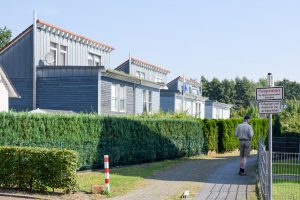
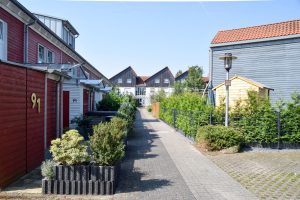
To date, the "Hoher Weg" eco-settlement in Hamm, with 120 residential units, is the second largest timber housing estate in Germany. This is astonishing because it was already built in the 1990s.
We use cookies to optimize our website and services.
Functional
Always active
Technical storage or access is strictly necessary for the legitimate purpose of enabling the use of a particular service explicitly requested by the subscriber or user or for the sole purpose of carrying out the transmission of a communication over an electronic communications network.
Preferences
The technical storage or access is necessary for the legitimate purpose of storing preferences that have not been requested by the subscriber or user.
Statistics
The technical storage or access, which is solely for statistical purposes.Technical storage or access used solely for anonymous statistical purposes. Without a subpoena, voluntary consent from your Internet service provider, or additional records from third parties, information stored or accessed for this purpose cannot generally be used alone to identify you.
Marketing
Technical storage or access is necessary to create user profiles, to send advertising or to track the user on a website or across multiple websites for similar marketing purposes.