"Walden 48" is the winner of the HolzbauPlus 2020 competition in the category "Residential multi-family building new construction".
Published
This building group project with 43 residential units, some of them as maisonettes, was realized as a timber hybrid building and exemplifies the qualities of timber construction in a dense urban context.
OWNER: Walden 48 GbR, c/o Mauer Bauprojektmanagement
PROJECT: Walden 48, 10249 Berlin
ARCHITECT: ARGE Scharabi | Raupach
CONSTRUCTION: Bulkhead solid wood construction (CLT) and wooden panel construction
INSULATION: wood fibre and others
Environment Minister Heinen-Esser: "The protection of the starry night sky serves health, species and climate protection and enables fascinating nature experiences at night".
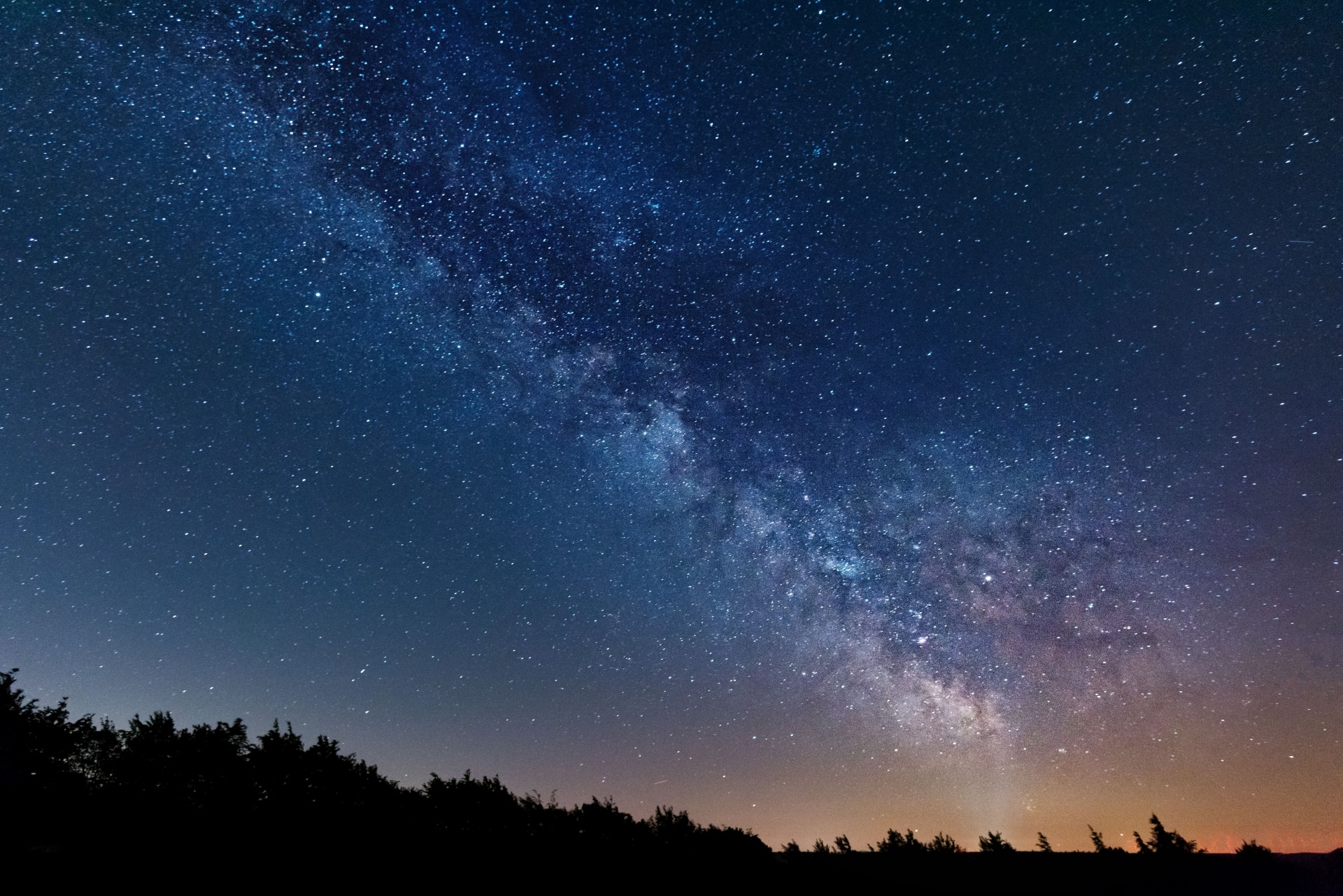
A fascinating natural spectacle: The Eifel National Park is one of few places in Germany where you can see the Milky Way with your naked eyes. Now the International Star Park Eifel National Park has received the final and so far unique recognition in western Germany. (Photo: Maximilian Kaiser)
Schleiden-Gemünd / Nettersheim, 05.04.2019. Experiencing the starry sky at night with twinkling celestial bodies is a special experience for many people that is now only possible in a few places in Germany - one of these places is the Eifel National Park. Since 2010, a regional initiative has been successfully campaigning for the protection of the night sky and the preservation of the natural night landscape - in 2014, this was followed by the provisional designation as the first "International Dark Sky Park" in Germany. Now this initiative can look forward to the final recognition as International Star Park Eifel National Park. On the grounds of the observatory of the astronomy workshop "Stars without Borders" in the Eifel National Park, Dr. Andreas Hänel, highest representative of the International Dark Sky Association (IDA) in Germany, presented the certificate of recognition to Environment Minister Ursula Heinen-Esser and the head of the Eifel National Park Administration Dr. Michael Röös. The distinction of being a protected area of the International Dark Sky Association (IDA) is a title that only a few regions worldwide can use to promote themselves, in Germany there are only four. For the Eifel National Park, which turned 15 this year, this recognition is a nice "birthday present".
The Eifel National Park is a refuge of undisturbed night skies and has been recognised as a star park since 2014. "Rarely does a topic offer so many win-win situations," said Environment Minister Ursula Heinen-Esser when handing over the certificate. She emphasised the many benefits of protecting the starry night sky: "Dark nights have a positive effect on health, conserve resources and thus help to protect the climate. Darkness is important for many nocturnal animal species, especially insects. Artificial light at night can be a serious threat to them." For North Rhine-Westphalia, he said, the final recognition of the Eifel National Park as the only star park in the entire western half of Germany was an outstanding honour. "The final recognition of the Eifel National Park as a star park helps to raise the profile of our state as a nature destination as well," the state environment minister summed up.
The initiative goes back to the astronomer and lighting consultant Harald Bardenhagen from Cologne, who managed to convince the region of the value of the starry sky. Initially, Bardenhagen found enthusiastic comrades-in-arms in the administration of the Eifel National Park, the district administration of Euskirchen, the national park towns of Schleiden and Heimbach, and those responsible for the Vogelsang property. However, until the final recognition as a Dark Sky Park, further efforts on different levels were necessary: In the design of the outdoor lighting to reduce the artificial light in the National Park and the directly surrounding villages or in the development of tourist offers for stargazing for the general public. The North Eifel Nature Park, in which the Eifel National Park is embedded, has also been intensively involved in this process.
Dr. Michael Röös, Head of the Eifel National Park Authority, thanked Mr. Bardenhagen for his unprecedented commitment against light pollution and his dedication to protecting the night sky and making it possible to experience it. "With the final recognition of the Eifel National Park as an International Star Park, we have reached an important milestone with the region and at the same time taken a pioneering role in the protection of darkness in North Rhine-Westphalia."
"Together we will significantly expand this unique selling point", Manfred Poth, Chairman of the North Eifel Nature Park, was pleased to say. With the innovative project application "Under the Tent of Stars - Eifel by Night", the nature park was able to prevail in the "Nature Park Competition.2021.NRW" of the NRW Ministry of the Environment and, for the first time in its history, took first place. "With the associated 400,000 euros in funding, the protection of darkness through public relations work, through educational offers of sustainable development and tourist infrastructure projects in the Eifel will experience a significant further development," explained Poth. More than 40 project partners, including the Eifel National Park Authority, want to participate in the realisation.
Bruderverlag has completely revised its popular smartphone application Holzbau-Finder for searching the vicinity of wooden buildings. New objects have been added, for the first time the two common operating systems iOS and Android are served and the design and user guidance have also been improved.
Osnabrück is the winner of the competition for the German Sustainability Award 2020 for large cities. The award has been presented by the Stiftung Deutscher Nachhaltigkeitspreis e.V. since 2012. The funding amount is 30,000 euros for sustainable urban development projects.
The Peace City of Osnabrück in Lower Saxony pursues an impact-based, strategic control approach in its sustainable development and uses the specially developed "KOSMOS" catalogue of indicators for this purpose, which enables both the administration and the citizens to review the implementation of strategic goals in detail. The municipality's participatory approach is also evident in the urban development master plan for the inner city, in which the citizens of Osnabrück were able to contribute their ideas for sustainable urban development. The master plan focuses, among other things, on redensification of the settlement structure, less space for motorised private transport and more green spaces with a high quality of stay. Extensive measures such as ecological standards in urban land-use planning, Germany's first solar roof register and sustainable "Economic Development 4.0" ensure more climate and resource protection.
On Saturday 14.4.2018, around 13,000 to 15,000 people took to the streets in Berlin under the slogan "Resistance - together against displacement and rent madness". 254 initiatives and organizations (see mietenwahnsinn.info/initiativen) called for the protest march. Many Berliners fear for their existence due to high housing costs.
Article "Large demonstration in Berlin - thousands against rent madness" in the taz: http://taz.de/Grossdemonstration-in-Berlin/!5498560/
3 min. video (Länderspiegel ZDF):
www.zdf.de/...grossdemonstration-in-berlin-rund-13-000-gegen-mietenwahnsinn-100.html
We use cookies to optimize our website and services.
Functional
Always active
Technical storage or access is strictly necessary for the legitimate purpose of enabling the use of a particular service explicitly requested by the subscriber or user or for the sole purpose of carrying out the transmission of a communication over an electronic communications network.
Preferences
The technical storage or access is necessary for the legitimate purpose of storing preferences that have not been requested by the subscriber or user.
Statistics
The technical storage or access, which is solely for statistical purposes.Technical storage or access used solely for anonymous statistical purposes. Without a subpoena, voluntary consent from your Internet service provider, or additional records from third parties, information stored or accessed for this purpose cannot generally be used alone to identify you.
Marketing
Technical storage or access is necessary to create user profiles, to send advertising or to track the user on a website or across multiple websites for similar marketing purposes.