Fast and sustainable construction, extension and renovation with wood
As part of Expo Real 2019, experts from the timber construction industry came together for the kick-off event of the Holzbau München network. Organiser Andreas Lerge, Managing Director of Wood Real Estate, opened the evening and welcomed his guests with the topics of digitalisation and professionalisation in timber construction. Larger timber construction projects are currently still underrepresented in German cities, but the general demand for living space in Munich will increase by around 250,000 flats by 2025. Reason enough to make urban timber construction the standard through serial construction and industrial prefabrication. The advantages are obvious: systemised construction reduces construction costs, only a few skilled workers are needed on site to assemble prefabricated modules, construction time and noise and traffic pollution are reduced.
Wood is so stable that it can be used to build high-rise buildings and at the same time unrivalled in its lightness that it can be used to add storeys to existing buildings. Another contribution to active climate protection is refurbishment and modernisation with wood, a renewable resource that is more than sufficient. In total, 18 million tonnes of CO2 can be bound in Bavaria alone. Alexander Gumpp, Chairman of the Board of Trustees of proHolz Bayern, believes it is imperative that a life cycle assessment and compliance with emissions limits are a mandatory component of construction projects. An ecological model housing estate is currently being built in Munich: the Prince Eugene Park. An exemplary urban timber construction that creates plenty of living space for many generations. We are committed to a sustainable forestry and timber industry in Bavaria in order to realise more timber construction projects so that we can call Munich a "timber construction city" by 2030.
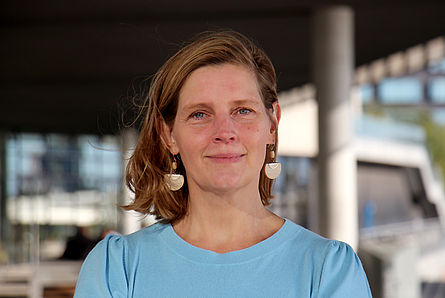
Dr. Kirsten David, a researcher at HafenCity University (HCU) Hamburg, has developed an innovative method for determining rent increases after energy efficiency measures: By means of functional cost splitting, rent increases become appropriate and comprehensible. The planning of the energetic measures is also ecologically optimized. For her dissertation entitled "Functional Cost Splitting for the Determination of Rent Increases after Energy Efficiency Measures", the scientist today receives the "BUND Research Award 2020". With the research award, the Bund für Umwelt- und Naturschutz (BUND) honors scientific work on sustainable development.
Rent increases due to energy-efficient building modernisation are legally permissible and politically desired as an investment incentive. After all, according to the German Energy Agency (dena), around 35% of Germany's total energy consumption is attributable to the building sector. An increase in the renovation rate is therefore necessary from a climate policy perspective.
However, while the legislators assume that such measures can be implemented economically and without affecting the rent, the experience of many tenants is different: Often the rent increases exceed the saved heating and energy costs many times over. In extreme cases, tenants can no longer afford their apartments. "To this day, energy-efficient building refurbishment has a reputation as a gentrification tool," says David. With the method she developed to determine appropriate rent increases, the 45-year-old scientist also wants to contribute to an increased social acceptance of corresponding measures.
"The basis of the politically expected increase amounts is the so-called coupling principle," explains the architect. "Like the Energy Saving Ordinance, it assumes that energy efficiency measures will always be implemented when a comprehensive refurbishment is due anyway. The sticking point: only the modernization costs entitle landlords* to rent increases, but not the costs for the renovation. The latter must be deducted from the total investment sum as "anyway costs". Eight percent of the remaining costs can be passed on to the tenants as a modernisation charge.
"The current regulation is insufficient. In practice, there are manifold demarcation problems between modernisation costs relevant to rent increases and maintenance costs not relevant to rent increases," says David. The method she developed, on the other hand, focuses on the climate-relevant improvement of each individual building component compared to its condition before the construction measure. "Functional cost splitting thus corresponds to the actual basic idea of the legislators, is practicable and enables an appropriate and comprehensible allocation to modernisation or refurbishment costs," says David.
According to the scientist, her approach leads to the omission of measures that are nonsensical from a structural engineering point of view and do not bring about any climate-relevant improvement of the building components: "With my method, such measures are not relevant for rent increases and are therefore uneconomical for landlords. In addition, your calculation method ensures that the modernization levy actually approaches the level of the ancillary cost savings as a rule. The award winner is therefore particularly pleased that the sustainability aspect of her work has been recognised with the BUND Research Award: "Rental housing stock can only be developed sustainably if ecological, economic and social aspects are given equal consideration. Functional cost splitting makes a significant contribution to this."
This year, the BUND Research Award will be presented at a virtual conference. Among other things, keynote speaker and environmental scientist Ernst Ulrich von Weizsäcker will discuss with the three award winners how science can develop more relevance and effectiveness for sustainability goals. The transfer into practice is also an important concern for David. Her next goal is to further develop functional cost splitting into an instrument that can also be understood by laypersons - preferably as an online tool.
Personal details:
Kirsten David is a guest researcher at HCU in the subject areas "Design and Analysis of Structures" with Prof. Dr.-Ing. Annette Bögle and "Construction Economics" with Prof. Dipl.-Ing. Reinhold Johrendt as well as a lecturer in the interdisciplinary study programmes. Her doctoral thesis was supervised by Prof. Dipl.-Ing. Reinhold Johrendt and Prof. Dr.-Ing. Thomas Krüger, (subject area "Project Management and Project Development in Urban Planning") and is freely available: https://edoc.sub.uni-hamburg.de//hcu/volltexte/2019/508/.
In Troisdorf, North Rhine-Westphalia, the largest tenant electricity project in Germany is currently running with subsidised funding from the so-called tenant electricity surcharge under the Renewable Energy Sources Act (EEG). The project, which was supported by EnergyAgency.NRW following an initial consultation, supplies 24 social housing apartments in three multi-storey buildings with a total of 75 residents with electricity. For this purpose, all roof surfaces were covered with photovoltaic modules with a total output of 86.9 kWp. The PV system is completed by six Powerwall 2 battery storage units from Tesla. "The tenants have committed 100 per cent to the project. In addition, the PV electricity, insofar as it is not consumed by the water-to-water heat pump or the tenants, is first stored in electricity storage units. This works so efficiently that we already reached an average self-sufficiency level of 83 percent in May. On isolated days and nights, even 98 percent," explains Frank Scholzen from Scholzen Immobilien, the company that owns the properties.
In rental electricity projects, electricity is generated in a rented property - by PV and/or combined heat and power (CHP) units. This direct electricity is often sold by the operator of the plant to the local energy supplier or - as in Troisdorf - by the landlord to the tenants. "The electricity offered to the tenants is cheaper than electricity from the grid. The advantage for the system operator is an additional income opportunity, as well as an ecologically sustainable electricity supply," explains Wilhelm Schröder from EnergyAgency.NRW, who accompanied the project in an advisory capacity.
However, the three buildings of Scholzen Immobilien are not only characterised by an innovative power supply, Troisdorf is also future-proof in the area of heat: The heating system consists of two water-water heat pumps with a combined thermal output of 76 kW. The well depth is only 14 metres - thanks to the high groundwater level not far from the Rhine. Scholzen: "The smart meters supplied by the Aachen-based company Discovergy enable continuous monitoring of the energy flows between the PV system, heat pump, energy storage and main meter."
In this complex and demanding project, many parties have to be coordinated. In Troisdorf, the following were involved:
Priogo AG from Zülpich (specialist partner for photovoltaics, heating technology, electromobility)
Discovergy GmbH from Aachen (smart metering systems)
Stadtwerke Troisdorf GmbH (distribution system operator)
Westfalen Group from Münster (residual electricity supplier)
Vaillant Group from Remscheid (manufacturer of the heat pumps) and Geotechnik GmbH from Wesseling (well drilling company)
In the meantime, the company Scholzen Immobilien is planning another tenant power project in Düsseldorf.
By the end of April 2018, a total of 19 tenant power projects subsidised under the EEG with an installed capacity of more than 350 kWp had been realised in NRW. The EnergyAgency.NRW has published a brochure entitled "Mieterstrom - kurz erklärt" (Tenant Electricity - Explained in Brief), which presents in detail the technical and legal aspects that need to be considered when implementing projects.
In cooperation between the TU Darmstadt and the Institute Housing and Environment (IWU), the endowed junior professorship "Models of Housing and Energy Policy in Cities" was established and filled by the scientist Kai Schulze. He teaches and conducts research at the Institute of Political Science in the Department of Social and Historical Sciences at TU Darmstadt.
Schulze's research focuses on environmental and energy policy analysis. To this end, he combines theories and approaches of policy analysis, comparative politics and Europeanisation. The junior professorship could also build thematic bridges to the engineering sciences. At the same time, the Institute Housing and Environment expects valuable impulses. The IWU, a non-profit institute financed by the State of Hesse and the City of Darmstadt, conducts interdisciplinary research on the housing market and housing policy as well as on the efficient use of energy in buildings. "From the cooperation with the endowed junior professorship, we hope to make valuable contributions to make findings from research more usable for policy and societal advice," says Dr. Monika Meyer, managing director of IWU. The Institute will bear the personnel costs of the junior professorship, which is initially limited to three years and can be extended for a further three years.
We use cookies to optimize our website and services.
Functional
Always active
Technical storage or access is strictly necessary for the legitimate purpose of enabling the use of a particular service explicitly requested by the subscriber or user or for the sole purpose of carrying out the transmission of a communication over an electronic communications network.
Preferences
The technical storage or access is necessary for the legitimate purpose of storing preferences that have not been requested by the subscriber or user.
Statistics
The technical storage or access, which is solely for statistical purposes.Technical storage or access used solely for anonymous statistical purposes. Without a subpoena, voluntary consent from your Internet service provider, or additional records from third parties, information stored or accessed for this purpose cannot generally be used alone to identify you.
Marketing
Technical storage or access is necessary to create user profiles, to send advertising or to track the user on a website or across multiple websites for similar marketing purposes.
 As part of Expo Real 2019, experts from the timber construction industry came together for the kick-off event of the Holzbau München network. Organiser Andreas Lerge, Managing Director of Wood Real Estate, opened the evening and welcomed his guests with the topics of digitalisation and professionalisation in timber construction. Larger timber construction projects are currently still underrepresented in German cities, but the general demand for living space in Munich will increase by around 250,000 flats by 2025. Reason enough to make urban timber construction the standard through serial construction and industrial prefabrication. The advantages are obvious: systemised construction reduces construction costs, only a few skilled workers are needed on site to assemble prefabricated modules, construction time and noise and traffic pollution are reduced.