The film "In Transition 2.0" (OmU; 65 min) shows examples from the Transition world (e.g. from Japan, New Zealand, India, England, the USA etc.) about the diversity & positive power of the Transition movement and the projects on the ground.
Building culture is becoming a recognised goal in the real estate industry: with support from the real estate and housing industry, the Institute for Corporate Governance in the German Real Estate Industry (ICG) and the Federal Foundation for Building Culture initiated and developed the Code for building culturea voluntary commitment for the responsible performance of tasks by companies in the real estate industry.
In its role as project developer, planner, builder, owner, etc., the real estate industry bears particular responsibility for the design of our living spaces. At the same time, building culture values and social acceptance form the basis for economic success. The Codex for Building Culture now supports companies in the real estate industry in assuming social responsibility for the consequences of real estate business activities and for the built results on their own initiative and within the framework of self-regulation. The fact that building culture offers added value for the real estate industry has now entered people's minds - but is not always put into practice. In the survey of the participation process for the code, for example, 98% of the companies surveyed stated that the appreciation of historic properties is seen as relevant or at least relevant to a certain extent - only half of the respondents, however, stringently implement this in practice.
Building culture is always closely linked to process quality, which is why the initiators of the Code for Building Culture were keen to involve the players in the real estate industry in the drafting process. Since a personal discussion of the contents was not possible due to the Corona pandemic, companies in the real estate and housing industry were asked in the summer of 2020 to provide feedback on the draft of the Code for Building Culture by means of an online survey and were thus involved. Scientific support was provided by IREBS at the University of Regensburg.
Prof. Dr. Sven Bienert, Chairman of the Institute for Corporate Governance in the German Real Estate Industry /IREBS Institute at the University of Regensburg, is in favour of this code because: "In times of rising land prices and ever higher building densities, the issue of a "good building culture" is becoming increasingly important. This form of social responsibility will also increasingly concern the real estate industry in the future in the ever more important after-use and conversion - for example of churches that are increasingly coming onto the market."
"Our goal is to make the real estate industry fit for the future," says Karin Barthelmes-Wehr, Managing Director of the ICG. "This includes encouraging the players in the industry to deal with all the requirements of ESG (Environment Social Governance) and to forge new alliances in this regard. For this, the Code for Building Culture we have presented provides a very good basis in the field of planning, development and construction."
Reiner Nagel, Chairman of the Board of the Federal Foundation for Building Culture, emphasises: "The Code for Building Culture now focuses on the responsibility of real estate business activities for the spatial impact of the built environment on us and the resulting consequences, with which companies grow in their building culture competence. As a result, the quality of the built environment benefits from the Code for Building Culture that is now available."
The complete "Code forBuildingCulture" and documentation of the participation process can be found at on our website. It contains the following demands (abbreviated).
Attitude and Values:
- Holistic building culture
- Prudent action in new construction and portfolio development
- Appreciation of already existing building culture
Visions and goals:
- Use stocks
- go easy on resources
- Promoting diversity and mix
Processes and Means:
- life cycle assessment
- quality assurance
- Cooperative collaboration
Supporters of the Codex for Building Culture already include:
- Art Invest
- reason of value
- Landmarken AG
- COPRO Project Development GmbH
- PRIMUS developments GmbH
Source: PM of the Bundesstiftung Baukultur from 17.5.2021
According to the annual balance sheet of the Federal Association of the German Heating Industry (BDH) presented today, the German market for solar thermal systems has shrunk further by 8 percent to 573,500 square meters of collector area.
There was no initial spark for the heating turnaround in 2018 either. This is the central result of the annual balance sheet of the Federal Association of the German Heating Industry (BDH). Although the manufacturers organised in the BDH were able to achieve an overall increase of 3 percent compared to the previous year with 732,000 heat generators sold. However, this plus resulted exclusively from the still dynamic new construction business. "Last year, around 600,000 appliances were used in the refurbishment of existing buildings. With around 12 million obsolete systems in the portfolio, the current modernisation rate is too low. Politicians must finally provide incentives to mobilise the abundant private capital for climate protection," says BDH President Uwe Glock.
Once again, modern gas condensing technology was the technology most in demand, with 492,500 appliances sold and an increase of 4 percent on the previous year. As in the previous year, heat pumps came second in the sales statistics with 84,000 appliances sold and an increase of 8 percent. This was followed by oil condensing technology with 58,500 appliances and a slight downward trend of 3 percent. The development of biomass-based systems was not satisfactory, with 24,000 units sold and a drop of 9 percent.
In addition to the market figures, the BDH also published the results of its annual multi-moment survey. In total, the 104 companies organised in the BDH generated a worldwide turnover of 15.1 billion euros with around 75,500 employees. 680 million euros were invested by manufacturers in research and development, once again demonstrating the high innovative strength of the heating industry. "The development has mainly taken place in the area of digitalisation. Digitalised and networked heating technology will be one of the defining themes of ISH 2019," says BDH General Manager Andreas Lücke.
The renovation project "Efficiency House Plus in Old Buildings" shows how two dilapidated rows of houses from the 1930s can be brought up to plus-energy standards - and in some cases that good architecture can be created in the process.
We use cookies to optimize our website and services.
Functional
Always active
Technical storage or access is strictly necessary for the legitimate purpose of enabling the use of a particular service explicitly requested by the subscriber or user or for the sole purpose of carrying out the transmission of a communication over an electronic communications network.
Preferences
The technical storage or access is necessary for the legitimate purpose of storing preferences that have not been requested by the subscriber or user.
Statistics
The technical storage or access, which is solely for statistical purposes.Technical storage or access used solely for anonymous statistical purposes. Without a subpoena, voluntary consent from your Internet service provider, or additional records from third parties, information stored or accessed for this purpose cannot generally be used alone to identify you.
Marketing
Technical storage or access is necessary to create user profiles, to send advertising or to track the user on a website or across multiple websites for similar marketing purposes.
![Ganzen Film anschauen [öffnet ein neues Fenster]](https://baufachberatung.net/wp-content/uploads/2013/03/In-Transition-2-0.jpg)



 Ecostation
 SA student dormitory Kaiserslautern
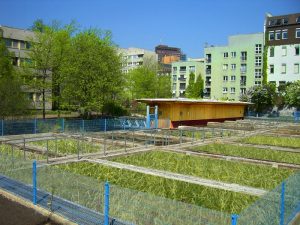 IBA Block 6
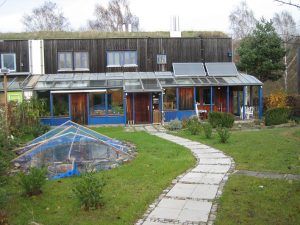 Frasenweg" housing estate
 Signal box 60 Cologne-Nippes
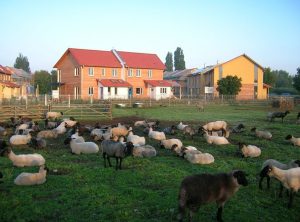 m round
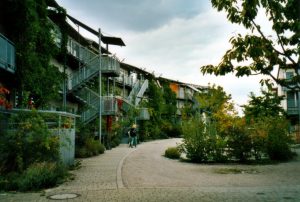 Ecological settlement Geroldsäcker Karlsruhe