1.6 million euros for private eco-investments in Schleswig-Holstein
Published
State government of Schleswig-Holstein launches climate protection support programme for citizens
Environment Minister Jan Philipp Albrecht: "Climate protection starts within our own four walls. Let's be the regenerative engine of our time together!"
KIEL: Environment Minister Jan Philipp Albrecht today presented the state's new funding programme for private investment in climate protection. It starts on Tuesday, 9 June, and includes a bundle of support measures.
"Climate protection starts within your own four walls. With the new funding programme, we are supporting citizens in making sustainable investments in the future. In this way, we can tackle climate change and develop society in a positive way. Let's be the regenerative engine of our time together!" said Albrecht. Every single investment in climate protection is important because it helps to achieve climate protection targets and conserve natural resources. "But not every investment can be afforded financially by private households. That's why we support all those who contribute to climate protection on a small scale, which helps us on a large scale. Because we can only tackle climate change together," said the Minister.
The purchase of cargo bicycles, e-charging stations, electricity storage systems, photovoltaic balcony systems, solar thermal systems, non-fossil heating systems and rainwater cisterns is subsidised. The installation of a district heating connection and a green roof are also subsidised.
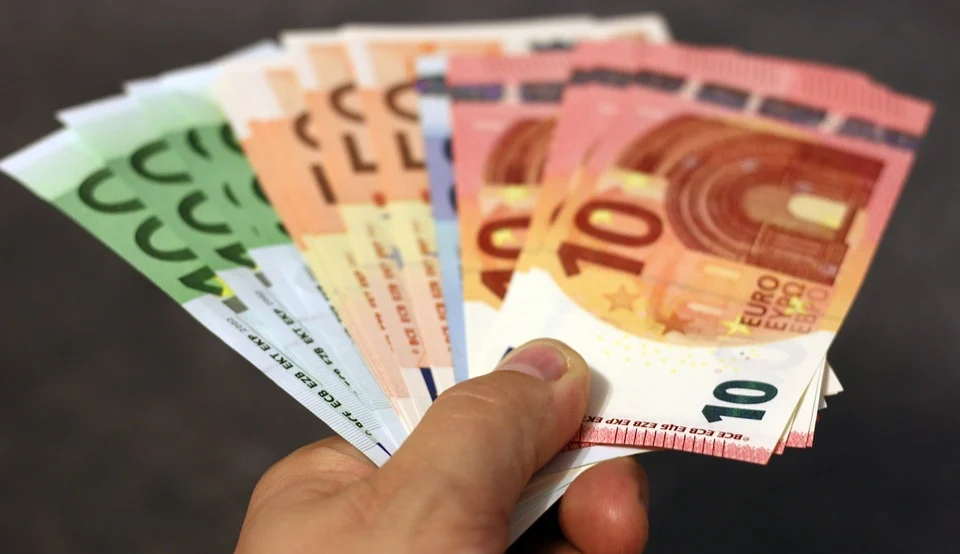
The state government is providing 1.6 million euros over three years for this purpose. The amount of funding varies depending on the object and can be up to 50 per cent - in individual cases even 75 per cent - of the eligible costs. A cargo bike, for example, is subsidised with a maximum of 400 euros. An electricity storage unit can be subsidised with 800 euros and an additional 200 euros for installation and connection costs.
Private individuals who have their primary residence in Schleswig-Holstein are eligible to apply. No economic activity may be carried out in connection with the object of this grant. Only one application per person is possible for the same measure. The same measure cannot be subsidised more than once.
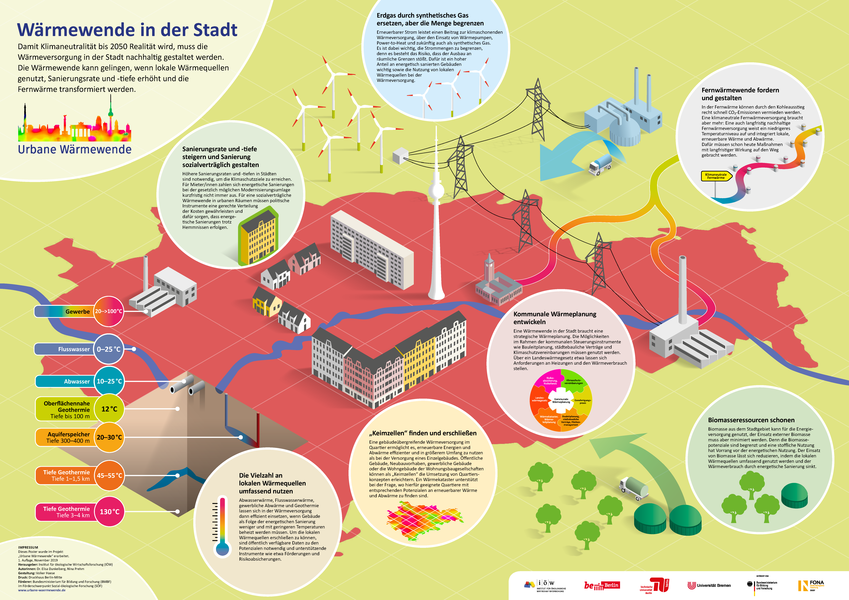
Berlin, 9 January 2020 - One of the Herculean tasks in achieving the climate targets is to radically reduce CO2 emissions from the heating supply. A research group led by the Institute for Ecological Economy Research (IÖW) is showing how cities can move away from coal, oil and gas in a socially responsible way. The "Urban Heat Transition" project analysed possible contributions from renewable energies and local heat sources in Berlin's urban districts. "Waste heat from businesses, heat from waste water or geothermal energy have hardly been utilised to date. The key to such environmentally friendly heat are neighbourhood concepts and heating networks," says project manager Bernd Hirschl from the IÖW. "An important prerequisite is a more efficient building stock. Only if the heat demand is significantly reduced can environmentally friendly heat sources be utilised efficiently."
In the three-year project, the project team from the IÖW, the University of Bremen and the Technical University of Berlin worked together with the Berlin Senate Department for the Environment, Transport and Climate Protection with funding from the Federal Ministry of Education and Research to develop local heating concepts for three Berlin neighbourhoods. At the end of 2019, they discussed their results with the heating industry in Berlin, and the documentation of the conference is now available online at www.urbane-waermewende.de.
Developing nuclei for the heat transition
"Previous neighbourhood concepts were often too complex, had too many different stakeholders and often ended up in a drawer. That's why we recommend a nucleus approach," says Elisa Dunkelberg from the IÖW. These could be public buildings, new construction projects, commercial buildings or housing associations and co-operatives.
The researchers show what a neighbourhood concept can look like for an old building district in Charlottenburg-Wilmersdorf: Firstly, the heat demand must be reduced through energy-efficient refurbishment. The heat can be generated using a wastewater heat pump, which is partly powered by solar electricity generated on site, in combination with combined heat and power generation. "Particularly in the case of public buildings, which have a pioneering role - enshrined in law in Berlin - it should always be checked in the case of refurbishment and new buildings whether they are suitable as a nucleus for a neighbourhood concept and the co-supply of surrounding buildings," emphasises Dunkelberg.
Climate-neutral district heating: utilising waste heat and renewables
District heating plays a major role in urban areas. "To become climate-neutral, it is important to integrate more local heat sources from wastewater, river water and geothermal energy as well as waste heat into district heating," says Hirschl, adding that attention must also be paid to the resilience of the heat generation system. A joint case study with the Neukölln district heating plant shows that it is possible to utilise local heat sources. But it needs to be tested technically and requires supporting financial measures. The next steps should now be test drilling for deep geothermal energy, for example, as well as pilot plants that use large heat pumps to provide wastewater or river water heat for district heating. Strategies for funding and risk protection are needed for investment in these technologies, some of which are untested and highly expensive.
Heat transition requires municipal strategic heat planning - and social compatibility
"Municipal heat planning, which has long been standard practice in pioneering countries such as Denmark and in other federal states and municipalities for some time, helps to tap into the identified potential," emphasises Hirschl. The basis for this is a heat register that visualises heat sources such as waste water and commercial waste heat. This can also be used to identify neighbourhoods for cross-building concepts. With sector coupling, it is also important that local authorities and cities plan across infrastructures. Instruments such as urban land-use planning and urban development contracts must be geared towards climate neutrality.
Low refurbishment rates in recent years show that purely incentive-based measures are not enough to ensure energy modernisation. The researchers therefore recommend implementing the regulations more strongly and developing a step-by-step plan to guide the building stock towards climate neutrality. At the same time, subsidies must be increased and conditions for passing on rent must be made more socially acceptable. A step-by-step plan under the conditions of a rent cap must be designed in such a way that energy modernisation is economically reasonable for both landlords and tenants.
Federal Ministry of Education and Research funds "Urban Heat Transition" project for another two years
The Federal Ministry of Education and Research is funding the project in a new partner constellation for a further two years in order to test solution strategies for the central obstacles to implementation and to anchor the research results in municipal heat planning. In addition to the IÖW, the partners are Berliner Wasserbetriebe and the law firm Becker Büttner Held.
The Timber Construction Award 2020 Building with wood in Schleswig-Holstein and Hamburg is awarded to buildings that have been constructed predominantly from wood and wood-based materials as well as other renewable raw materials. The primary objective is to promote the use and further development of this resource-saving, environmentally friendly and sustainable building material. The buildings to be submitted should be of high design quality, exemplary in their implementation and comply with the principles of social and ecological sustainability. Ecology, energy efficiency and economic efficiency in operation and maintenance up to recyclability are included in the evaluation.
Deadline is Monday, the 9 December 2019 (date of postmark).
The Wood Construction Prize is awarded by the State Advisory Council for Forestry and the Timber Industry of the State of Schleswig-Holstein and the Free and Hanseatic City of Hamburg as well as the Ministry for Energy Transition, Agriculture, Environment, Nature and Digitalisation of the State of Schleswig-Holstein in cooperation with numerous partners, including the Chambers of Architects and Engineers and the Informationsverein Holz from Düsseldorf.
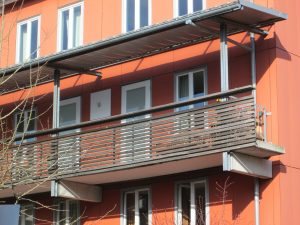
Many thanks to Johann Hartl for the photos of the "Neue Wege" housing project from 25 March 2017. The Augsburg model project for multi-generational living in cost-effective timber construction was completed in 2000.
Click here for further information: http://sdg21.eu/db/wohnprojekt-neue-wege
We use cookies to optimize our website and services.
Functional
Always active
Technical storage or access is strictly necessary for the legitimate purpose of enabling the use of a particular service explicitly requested by the subscriber or user or for the sole purpose of carrying out the transmission of a communication over an electronic communications network.
Preferences
The technical storage or access is necessary for the legitimate purpose of storing preferences that have not been requested by the subscriber or user.
Statistics
The technical storage or access, which is solely for statistical purposes.Technical storage or access used solely for anonymous statistical purposes. Without a subpoena, voluntary consent from your Internet service provider, or additional records from third parties, information stored or accessed for this purpose cannot generally be used alone to identify you.
Marketing
Technical storage or access is necessary to create user profiles, to send advertising or to track the user on a website or across multiple websites for similar marketing purposes.

 Environment Minister Jan Philipp Albrecht: "Climate protection starts within our own four walls. Let's be the regenerative engine of our time together!"