The Austrian parliament has implemented an emergency package to promote photovoltaics. From 2020 onwards, an annual budget of 36 million euros will be available for the investment promotion of photovoltaic systems and electricity storage.
21 February 2019. the municipality of Lamspringe in Lower Saxony is the 100th drawing municipality.
Lamspringe is one of twelve model municipalities that want to develop local sustainability strategies by the end of 2019 as part of the project "Globally Sustainable Municipality in Lower Saxony". By signing the model resolution "2030 Agenda for Sustainable Development: Shaping Sustainability at the Municipal Level" of the German Association of Cities and Towns and the German section of the Council of European Municipalities and Regions, Lamspringe has now already sent a clear signal.
Other municipalities can also take responsibility for achieving the 17 global Sustainable Development Goals (SDGs) and become active in development policy.
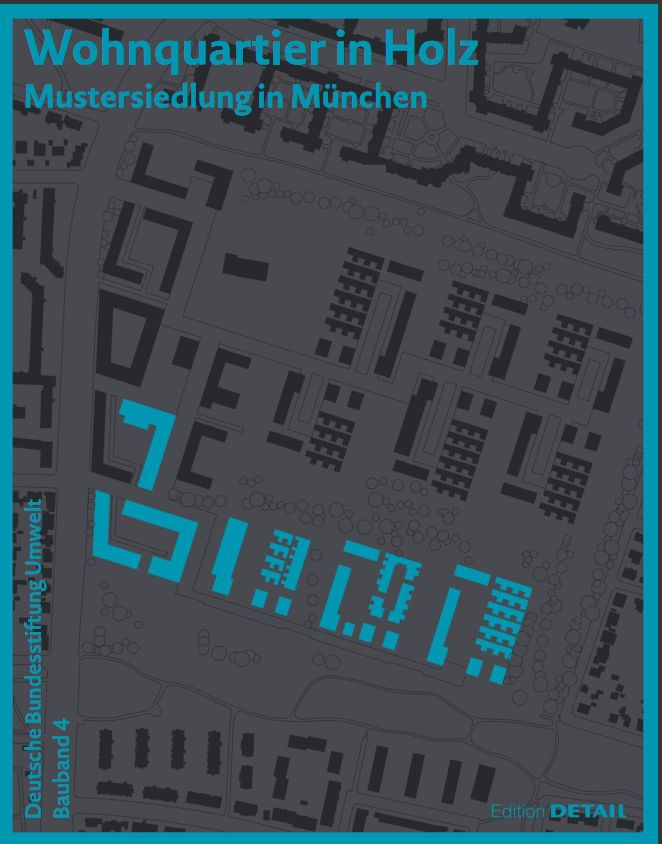
Timber construction can be cheaper than standard construction - At the same time significantly better CO2 balance
MNP Architects Munich, School Wangen
Current comparative calculations based on realized new buildings in timber construction show: Building with wood does not have to be more expensive than the standard construction method. This result is surprising, as it contradicts the common perception that timber construction is more expensive. At the same time, the CO2 balance of timber construction is significantly better; as a result, its CO2 avoidance costs are very favourable, in some cases even negative. An expansion of timber construction would therefore be climate protection at comparatively low cost.
The architect and developer of the Legep construction software, Holger König, has balanced the construction costs and CO2 emissions for the production of five public and private timber buildings and compared them with the results that would have been produced for the same buildings if they had been built in the conventional way. Legep can be used to calculate the manufacturing and life-cycle costs, energy requirements and environmental impact of buildings. In this case, König only looked at manufacturing. For the prices, he used current sirAdos data, which represent the market very realistically. He then went to the trouble that many architects, civil engineers and building owners shy away from: He modeled the buildings with the same area and cubature and the same energy standard, but replaced the wooden components with conventional materials - depending on the building project, solid masonry in brick, sand-lime brick or aerated concrete, or a column-beam supporting structure made of reinforced concrete. He used reinforced concrete for the floor slab, cellar, ceilings and flat roofs, mineral wool or polystyrene for the insulation, and plastic or aluminum frames for the windows. König explains the fact that four out of five buildings in timber construction cost less or the same as in standard construction with the industrial-technical development that many timber construction companies have undergone in recent years. Two of the timber buildings even achieved a negative CO2 balance in the manufacturing phase due to the large amount of renewable raw materials used, which act as carbon stores. In the other three buildings, a slightly higher proportion of non-wooden components, which every timber building also contains, caused the slightly positive CO2 balance.
If one relates the difference in CO2 savings to the difference in construction costs, one obtains the CO2 avoidance costs of timber construction. Negative abatement costs here mean that the builder has saved costs with timber construction compared to standard construction and at the same time protected the climate.
By increasing the proportion of timber construction, more climate protection can be achieved at low or even negative costs, while at the same time strengthening rural areas. The green-red state government in Baden-Württemberg has recognised this and created more favourable framework conditions for the building material in its state building code, which was amended on 1 March (information here). In contrast, some state building codes still contain legal obstacles to building with wood.
The city of Munich also wants to convince more builders to use timber construction: as part of its "Munich Energy Saving Promotion Programme", it has been granting a CO2 bonus for the use of timber and other renewable raw materials in building construction of 30 cents/kg since 2013 (information here).
A high insulation standard with insulating materials made from renewable raw materials is also a contribution to climate protection. The plant raw materials from which the insulating materials were obtained have bound CO2 from the atmosphere, which is now stored in the building material for long periods of time. And finally, heating based on renewable energies also reduces CO2 emissions.
The Agency of Renewable Resources (Fachagentur Nachwachsende Rohstoffe e.V.). (FNR) funded the determination of LCA baseline data for the Legep programme with funds from the Federal Ministry of Food and Agriculture (BMEL) between 2004 and 2006.
The balcony modules with which EWE has equipped an entire apartment building in Delmenhorst have been in operation for a year. The yield balance shows that tenants use almost 80 per cent of the solar electricity themselves and can cover up to 20 per cent of their electricity consumption with it.
Great joy in Aachen: One of the central urban development projects is awarded special federal funding.
Mayor Sibylle Keupen: "This is a super message for our city!"
The Büchel old town quarter is one of 24 projects nationwide that are now being supported with a total of 75 million euros.
98 cities and municipalities had applied.
A most welcome piece of news reached the city of Aachen this morning (17 March 2021): Federal Minister Horst Seehofer has announced this year's selection of the "National Projects of Urban Development" and announced that the development of the Büchel old town quarter will receive up to 5.5 million euros in funding. Aachen is thus one of four municipalities in NRW to have been awarded the contract. With the amount of funding, the city is in third place nationwide.
Great news from Berlin: The federal government wants to support the development of the Büchel in Aachen's city centre with up to 5.5 million euros. Photo: City of Aachen / Andreas Herrmann
OBin Keupen: "We feel the spirit of optimism!"
"This is a great message for our city," says Mayor Sibylle Keupen in her first reaction. "We have long felt the spirit of optimism around the Büchel in Aachen. The demolition of the multi-storey car park is imminent, the planning workshop was a great success, many groundbreaking political decisions have been made, and more are on the horizon. Above all, many city makers are on board and want to be involved in a very concrete way. They want to participate, to shape, to plan, to build. The fact that this high level of commitment of all those involved here on site has now also triggered such a response at federal level encourages us to continue on the path of 'making a city at Büchel'."
City Planning Director Burgdorff: "Aachen can play in the Bundesliga!"
The municipal councillor for urban development, construction and mobility, Frauke Burgdorff, adds: "I am extremely pleased that Aachen, if it sticks together, can also play in the Bundesliga! Aachen's politicians have united behind the project and have given their backing to the state and federal governments. Thank you for that! But I would also like to express my sincere thanks to those who have done the substantive work here on site, to the municipal project manager Nils Jansen as well as to Christoph Guth and Antje Eickhoff, who have done an excellent job on the part of the municipal development company SEGA."
Making town at the Büchel
A special piece of the city at eye level is to be created at Büchel. It is being developed together with many committed people and institutions. With this approach, it has also precisely met the requirements of the call for proposals. The Federal Ministry's project overview states: "Knowledge, living, meadow" are the keywords under which a mixed-use, urban quarter is to be created in the heart of Aachen's old town in a cooperative and exemplary development process that is wanted and supported by the urban community.
The basis for the development is the exploratory procedure "Stadt machen am Büchel" (Making a city at Büchel), which the city of Aachen launched in spring 2020. City Planning Director Burgdorff sums up: "A multi-storey car park has been blocking the development of the old town for decades. We are tearing it down and building a new urban quarter. The urban community itself is developing the programme, urban design and investment strategy. This project offers a unique opportunity to find answers to the question of how a major wound in the old city can be healed with contemporary building-cultural responses."
The next steps
Following today's basic commitment by the federal government to fund the project, the detailed applications for funding will be drawn up in phase 2. In this ongoing process - and on the basis of upcoming landmark decisions of Aachen's municipal politics - it will now be worked out how the Büchel of the future will take shape with the funding millions.
National urban development projects
National urban development projects are nationally and internationally visible, larger-scale urban development projects with clear impulses for the respective municipality or city, the region and urban development policy in Germany as a whole. They are characterised by a special quality standard with regard to the urban development approach, the building culture aspects and the participation processes, contribute to the realisation of the federal government's building policy objectives and have innovation potential. National urban development projects are projects that generally solve tasks and problems of considerable financial dimension. The focus is on the major challenges currently facing cities and municipalities in Germany (e.g. preservation of existing buildings, conversions, sustainable neighbourhood development).
A total of 24 projects for forward-looking urban development are being funded by the federal government with a total of around 75 million euros. 98 cities and municipalities from all over Germany applied for the funding.
More info Interesting facts about the Büchel can be found on the Internet at www.buechel-aachen.de
From Aprill 2021 the Demolition work on the Büchel multi-storey car park. All the info on this has been presented as part of an online event. The stream is still available on the YouTube channel of the city of Aachen: https://youtu.be/KQqFq6v_edA.
Within the framework of a cooperative planning workshop, three teams of experts developed three exciting designs for the Büchel, each with a focus on the major themes of "knowledge, living, meadow". The final presentation of the planning workshop, which took place digitally in January 2021, is also still available as a stream: https://youtu.be/AWSb5Gx3gKA.
We use cookies to optimize our website and services.
Functional
Always active
Technical storage or access is strictly necessary for the legitimate purpose of enabling the use of a particular service explicitly requested by the subscriber or user or for the sole purpose of carrying out the transmission of a communication over an electronic communications network.
Preferences
The technical storage or access is necessary for the legitimate purpose of storing preferences that have not been requested by the subscriber or user.
Statistics
The technical storage or access, which is solely for statistical purposes.Technical storage or access used solely for anonymous statistical purposes. Without a subpoena, voluntary consent from your Internet service provider, or additional records from third parties, information stored or accessed for this purpose cannot generally be used alone to identify you.
Marketing
Technical storage or access is necessary to create user profiles, to send advertising or to track the user on a website or across multiple websites for similar marketing purposes.