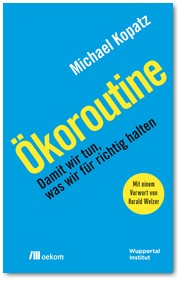
In Norderstedt, there is a housing project where you can only live if you have a special electric car with a rechargeable car charging box. Small catch: this doesn't even exist yet.
Climate Alliance calls on politicians to protect the climate with the Climate Action Call shortly before the EU elections
Stakeholders from across Europe have today launched a call for climate action. "Hundreds of cities across Europe and the world are declaring a climate emergency. They are pushing for an end to fossil fuels and the exclusive use of renewable energy to contribute to climate justice worldwide," explains Thomas Brose, Executive Director of Climate Alliance, co-signatory of the call. "It is time for current and future EU politicians to work together to turn this goal into a European reality."
The Climate Action Call was launched in the run-up to the meeting of heads of state and government on 9 May on the future of Europe and the European elections, which will take place from 23 to 26 May. In parallel, more than 200 mayors are sending an open letter to the European Council and its member states calling for a sustainable and future-proof climate policy. The signatories of the Climate Action Call are calling on current and future EU leaders to take social and municipal calls seriously, take action and make climate action a top priority.
The Climate Action Call lists the following five steps for the new EU Parliament and the Commission as well as all EU member states:
reduce greenhouse gas emissions more quickly by 2030 and achieve greenhouse gas neutrality as quickly as possible.
Focus on the end of fossil fuels and support energy efficiency, renewable energy and emission reductions outside the energy sector.
Ensure fair and equitable structural change. Furthermore, to ensure that the EU provides greater support to developing countries in climate protection and adaptation to climate change.
step up efforts to introduce the circular economy and increase resource efficiency.
protect biodiversity and promote the restoration of ecosystems as a crucial component of climate protection.
Hundreds of cities, companies, investors, scientists, religious communities, sports clubs and civil society organisations from areas ranging from climate protection to human rights and health have taken up the Climate Action Call to bring about profound changes in how we organise our society and economy to keep global warming below 1.5°C.
For more than 25 years, the member municipalities of the Climate Alliance have been working with their indigenous partners in the rainforests to protect the global climate. With 1,700 members from 26 European countries, the Climate Alliance is the world's largest city network dedicated to climate protection and the only one to set specific targets: Each Climate Alliance municipality has committed to reducing its greenhouse gas emissions by ten per cent every five years. As our lifestyle has a direct impact on particularly endangered peoples and places on this planet, the Climate Alliance combines local action with global responsibility. www.klimabuendnis.org
In 2013, ABG FRANKFURT HOLDING built an apartment building with 17 residential units at Cordierstrasse 4 in Frankfurt am Main as a passive house with energy gain in an existing neighbourhood. The orientation of the new replacement building, which was unfavourable for solar optimisation, posed particular challenges in achieving an energy surplus in the annual balance.
This final report documents the results of the measurement period from July 2014 to June 2016.
Isabella Marboe (ed.) Bauen für die Gemeinschaft in Wien Neue gemeinschaftliche Formen des Zusammenlebens. Edition Detail 2021, 144 pages, de/eng, Euro 39.90
Review by Roman Schaurhofer, Vienna
Overview
The book "Building for the Community in Vienna" was published in 2021 by Isabella Marboe at Verlag Detail. All texts were printed in German and English in the book. In addition to an interview conducted by Marboe with Ulrike Schartner and Alexander Hagner, Robert Temel has his say in an expert article.
All in all, the book deals with 20 building projects in the Austrian capital Vienna and offers insight into the respective planning as well as the organisational and structural realisation of those very communities.
Content
At the beginning, Isabella Marboe looks back at historically relevant and significant events surrounding Viennese housing, community in everyday life and housing, and participatory building. The editor then highlights the importance and significance of the architect Ottokar Uhl and his work. Especially the projects "Living with Children" and "B.R.O.T." are mentioned and described as positive examples. In addition, Marboe goes into more detail about the historical developments surrounding the "Sargfabrik" and "MISS Sargfabrik" projects. Isabella Marboe is committed to a communal and socially solidary as well as responsible coexistence.
In Robert Temel's contribution, after a historical classification of Austrian pioneer and follow-up projects, there is also a brief description of organisational and ownership models. This is followed by an outline of the emergence of building communities and their possibilities for acquiring a building plot, as well as a comparison of several models implemented in Vienna.
In an interview, Ulrike Schartner and Alexander Hagner from gaupenraub+/- explained the many challenges that arise when creating quality housing for homeless people and at the same time show approaches to dealing with problems of this kind.
After the essays and the interview, there is a more detailed examination of the individual projects. A brief description, accompanied by key figures and background information, provides insights into the planning and implementation of the respective community ideas. In addition, illustrations and detailed plans (often in the form of floor plans) give the reader a better understanding of the structure and function of the respective project. In addition to individual buildings, row houses, multi-storey residential buildings and neighbourhood houses that stand out from their surroundings were also selected.
Criticism
The social and socially solidary approach of the project examples stands out in a clearly positive way. Each of the projects features people-oriented planning and high-quality implementation geared to the wishes of the residents, without losing sight of the demand for high-quality architecture. Although the communal and participatory character is clearly in the foreground as a unifying element, the individual projects cannot be denied their uniqueness and individuality in approach.
The detailed information, underpinned by pictorial representations, enables the reader to place the projects conceptually and contextually in their respective environment. With the overview and detailed descriptions of the sample projects, the editor Isabella Marboe offers a solid basis with carefully researched project examples for professional discourse and a more intensive examination of the topic of building communities.
February 2021, Hardcover, 23 x 30 cm, German / English
The study "Greenhouse gas balancing of timber buildings -implementation of new requirements for life cycle assessments and determination of empirical substitution factors (GHG timber construction)" led by Prof. Dr. Annette Hafner (RuhrUni Bochum) has now been published.
We use cookies to optimize our website and services.
Functional
Always active
Technical storage or access is strictly necessary for the legitimate purpose of enabling the use of a particular service explicitly requested by the subscriber or user or for the sole purpose of carrying out the transmission of a communication over an electronic communications network.
Preferences
The technical storage or access is necessary for the legitimate purpose of storing preferences that have not been requested by the subscriber or user.
Statistics
The technical storage or access, which is solely for statistical purposes.Technical storage or access used solely for anonymous statistical purposes. Without a subpoena, voluntary consent from your Internet service provider, or additional records from third parties, information stored or accessed for this purpose cannot generally be used alone to identify you.
Marketing
Technical storage or access is necessary to create user profiles, to send advertising or to track the user on a website or across multiple websites for similar marketing purposes.