
 Konturen einer solidarischen Stadtpolitik
Anton Brokow-Loga (Hrsg.),
Frank Eckardt (Hrsg.)
Städte ohne Wachstum – eine bislang kaum vorstellbare Vision. Doch Klimawandel,
Ressourcenverschwendung, wachsende soziale Ungleichheiten und viele andere
Zukunftsgefahren stellen das bisherige Allheilmittel Wachstum grundsätzlich infrage. Wie wollen
wir heute und morgen zusammenleben? Wie gestalten wir ein gutes Leben für alle in der Stadt?
Konturen einer solidarischen Stadtpolitik
Anton Brokow-Loga (Hrsg.),
Frank Eckardt (Hrsg.)
Städte ohne Wachstum – eine bislang kaum vorstellbare Vision. Doch Klimawandel,
Ressourcenverschwendung, wachsende soziale Ungleichheiten und viele andere
Zukunftsgefahren stellen das bisherige Allheilmittel Wachstum grundsätzlich infrage. Wie wollen
wir heute und morgen zusammenleben? Wie gestalten wir ein gutes Leben für alle in der Stadt?
Blog posts
859 posts
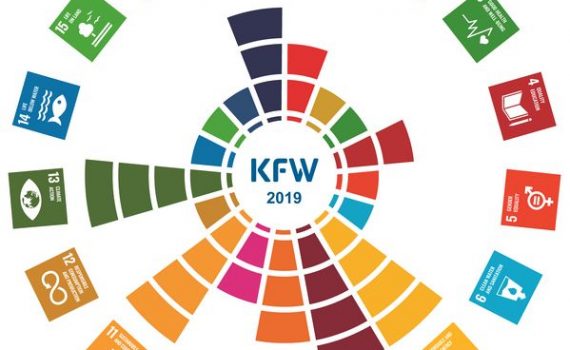
- Over EUR 28 billion for "climate protection measures": KfW is one of the most important supporters of the Paris climate goals
- Promotional bank is a global pioneer with its standardised SDG mapping
- Strong international interest in KfW SDG mapping
 KfW is today publishing the results of the SDG mapping of new commitments throughout the Group in 2019. In order to clarify the individual contribution made by KfW's new commitments to achieving the UN Sustainable Development Goals, KfW has developed a standardised procedure: 1,500 indicators are used each year to determine to which SDGs KfW's new commitments can be assigned. This makes the contribution transparent at both group and business sector level.
Min. 4:36; Video from 18.02.2020; Ed.: MWSP Mannheim
Mannheim's conversion is green - this is demonstrated by the work of the municipal development company MWSP on the TURLEY, TAYLOR, FRANKLIN and SPINELLI sites.
The federal government can give a short-term boost to public housing construction in Germany and thus help to ease the acute housing shortage in many large cities. The key to this is three federally owned companies that provide flexible support to the federal states and local authorities in the development of construction projects and the construction of new housing: Firstly, a consultancy company that provides planning capacities to cities and municipalities. Secondly, a land fund that provides financial and conceptual support to local authorities nationwide in acquiring building land and financing infrastructure. Thirdly, an investment company that strengthens the equity of municipal housing construction companies through financial participation. Prof Dr Sebastian Dullien, Scientific Director of the Institute for Macroeconomics and Economic Research (IMK) at the Hans Böckler Foundation, and Prof Dr Tom Krebs from the University of Mannheim show this in a new concept for a federal "Future Housing" initiative.

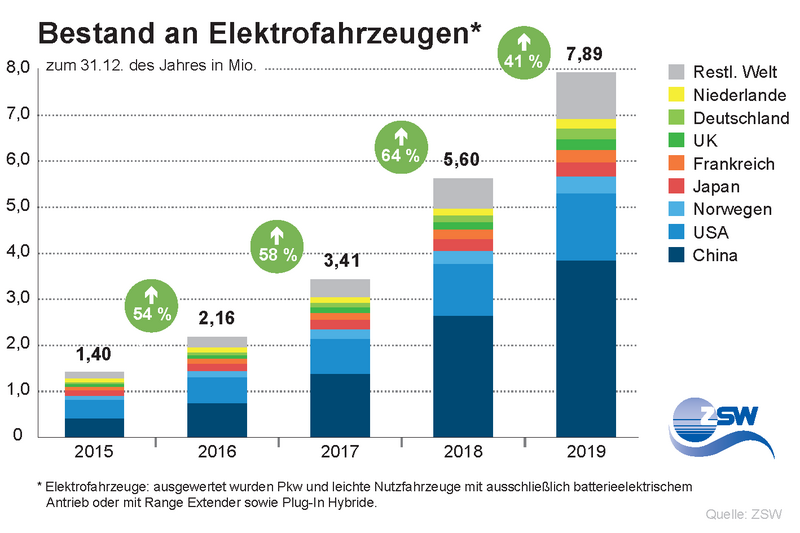
More new registrations, growth rate weakened / German manufacturers in 5th and 6th place
In 2019, the number of electric cars worldwide rose to around 7.9 million - an increase of 2.3 million compared to the previous year. The number of new registrations once again reached an all-time high, but grew only slightly compared to 2018. With a total of 3.8 million e-cars, China remains the undisputed global leader. It is followed by the USA with just under 1.5 million. The growth rate of new registrations declined in these two countries in particular. In Germany, on the other hand, the market continued to develop positively, albeit at a lower level: here, just under 231,000 electric vehicles were rolling along the roads at the end of 2019. The new figures come from a recent survey by the Centre for Solar Energy and Hydrogen Research Baden-Württemberg (ZSW). According to the researchers, Tesla recorded the most new registrations worldwide in 2019, with 361,000. German manufacturers continued to improve on the previous year: BMW is in fifth place worldwide with 114,500 electric cars. VW reaches sixth place.Funding is available for greening facades and roofs as well as for unsealing on private, public and commercial properties in the Hannover city area.
A further 700,000 euros will be available for #moinzukunft cargo bikes from 1 April. Up to 2,000 euros in subsidies are possible for the purchase of a new e-load bike and 500 euros for normal load bikes.
From 2022, all new public buildings must be made of at least 50 per cent wood or other sustainable building materials. For buildings with more than eight storeys, the supporting structure must even be made entirely of wood. It was also decided that 90 ecological neighbourhoods and 100 urban farms will be built in Paris.
With retroactive effect from 1 January 2020, the timber construction subsidy in Hamburg has now officially been increased to EUR 0.80 per kilogramme of timber product as part of the various subsidised housing construction programmes. As a prerequisite for the subsidy,...


 [su_spacer]
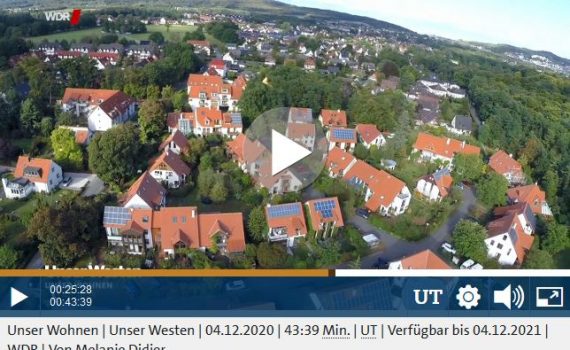
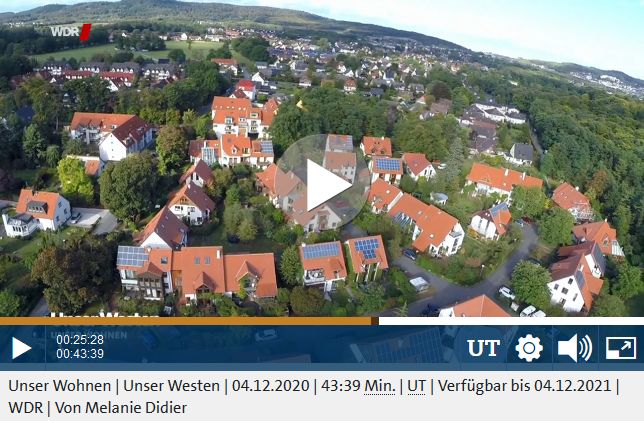
The documentary features a 5-minute sequence about the Waldquelle ecological housing estate in Bielefeld. Ute Möller, one of the founders, gives a tour of the eco-settlement and talks about the experiences and developments in the now almost 25-year-old settlement with lots of wood, greenery and solar cells on the roof.
[su_spacer]
The documentary features a 5-minute sequence about the Waldquelle ecological housing estate in Bielefeld. Ute Möller, one of the founders, gives a tour of the eco-settlement and talks about the experiences and developments in the now almost 25-year-old settlement with lots of wood, greenery and solar cells on the roof.
Newly built districts with space-efficient mobility offers
A new sustainable urban district is being built on the west side of the Merwedekanal in a central location not far from Utrecht Central Station. The plan is to create a mixed-use district with 6,000 to 9,000 homes for approximately 12,000 residents. The area will become a showcase for healthy and sustainable living with innovative concepts for recycling, energy production, climate adaptation and mobility solutions. Planned completion: by 2024
Since 1 January 2020, all new buildings and general renovations of the BIG Group have been subject to the Group-wide mandatory minimum sustainable standard. The BIG minimum standard goes beyond the legal requirements and ensures that all projects of BIG and its subsidiary ARE achieve the klimaaktiv SILVER standard in any case. The sustainable minimum standard of the Bundesimmobiliengesellschaft (BIG) is a catalogue of criteria that must already be taken into account in the planning process for buildings. This makes the implementation of 43 measures of the BIG Holistic Building Programme (HBP)* and the achievement of at least 750 klimaaktiv points mandatory for all new construction and general refurbishment projects for which a planning invention procedure will be carried out from 2020. By implementing the minimum standard, CO2 emission values are significantly reduced, climate-damaging building materials are avoided and the phase-out of fossil fuels is accelerated.
7-storey timber (hybrid) building. 66 bathroom modules were designed as a complete technical core for the student apartments.

Climate protection has long been one of the most urgent topics for the housing industry. In order to achieve a climate-neutral building stock by 2050, the 24 founding companies of the Wohnen.2050 initiative met in Berlin on 28 January 2020 to found the association. The nationwide association was initiated by the Nassauische Heimstätte | Wohnstadt group of companies.
 "Don't just talk about climate change, act" - under this motto, the Nassauische Heimstätte | Wohnstadt Group invited founding partners from all over Germany to found the Initiative Wohnen.2050 (IW2050) association. The overarching objective is a climate policy alliance, which, in addition to strategic cooperation and a technical and content-related comparison, primarily focuses on economic and financial concerns to achieve the targets.
 Recently, the Austrian state of Vorarlberg published the subsidy guidelines for 2020 and 2021 for residential renovation and new construction in the private and public sectors. The climate-friendly procurement of wood and wood products from the region is anchored in these guidelines. The origin of the wood must be proven by means of the "Holz von Hier" label recently introduced in Austria or comparable certificates.
A research project conducted by natureplus in conjunction with IFEU compares insulation materials with regard to their environmental impact throughout their entire life cycle, including recovery and recycling.

 Which insulation material is the best? This question is extremely popular in the construction industry and can ultimately only be answered in the context of the respective construction. In particular, there has so far been a lack of a holistic overview that enables builders and planners to identify the strengths and weaknesses of the various insulation material alternatives in terms of their life cycle assessment, without having to disregard subsequent disposal.
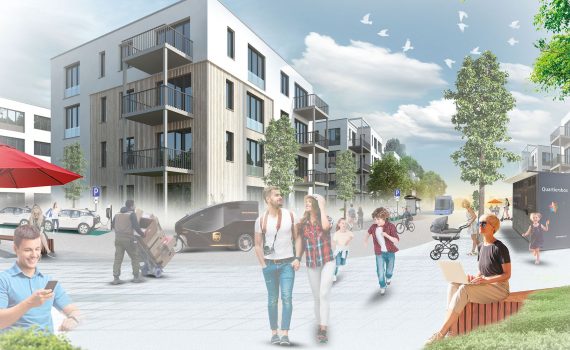
 At a press conference today, Lord Mayor Dieter Reiter, together with City Planning Councillor Professor Dr. (l) Elisabeth Merk, presented an overall plan for Munich's mobility in the coming decades.
Thuringia is making six million euros available this year for investments in municipal climate protection. The funding comes from the state's "Klima Invest" programme, which has already provided more than 15.5 million euros in investments in municipalities since the beginning of 2018, as the Ministry of the Environment announced in Erfurt on Thursday. 312 applications for funding have been approved.
 27.01.2020 A material revolution that replaces cement and steel with wood in urban construction can have double benefits for climate stabilization. This is now shown in a study by an international team of scientists. First, it can avoid greenhouse gas emissions from cement and steel production. Secondly, it can turn buildings into carbon sinks, since in the construction timber the CO2 is stored. Although the required amount of wood is theoretically available, such an expansion would require very careful sustainable forest management, the authors emphasize.
This week, the German cabinet plans to adopt the draft bill on the coal phase-out law. However, the roadmap for the shutdown of coal-fired power plants that is to be voted on deviates in several places from the coal compromise reached last year. The Solar Cluster Baden-Württemberg points this out and demands considerable improvements. According to the draft law, carbon dioxide emissions will be reduced significantly less than agreed in the first ten years: By 2030, only five gigawatts instead of 20 gigawatts of power are to be switched off. In addition, the number of CO2 allowances will not fall to the same extent as coal-fired power generation.
150 concrete proposals are contained in a catalogue that the city of Bonn has drawn up in recent months following the declaration of the climate emergency. Many of the measures can be implemented directly by the administration, while others require a political decision. At a press conference on Wednesday, 22 January 2020, Lord Mayor Ashok Sridharan and City Planning Officer Helmut Wiesner presented the catalogue of measures. On 4 July 2019, Bonn City Council decided to support a resolution to declare a climate emergency. Bonn has thus joined other municipalities and reaffirmed that climate protection must be a top priority in municipal action. The administration has therefore drawn up a catalogue of measures over the past few months with the involvement of all departments.

 21.01.2020 Everyone is talking about sustainability - including the construction industry. A prize that the Federal Ministry for the Environment, Nature Conservation and Nuclear Safety (BMU) and the Federal Environment Agency (UBA) have been offering since today provides the appropriate topic for discussion: With the new "Federal Award for Environment and Building", which will be awarded for the first time in 2020, the initiators want to distinguish projects with exemplary character in terms of sustainability - not only in the classic areas of existing buildings and new buildings, but also in five other categories. All players in the building sector can apply. The deadline for entries is 15 April 2020.
The following sdg21 web pages had the most hits from January 1 to December 31, 2019: Page views were only recorded if "Do not track" was disabled in the user's browser. This means the actual access numbers are likely to be significantly higher sdg21 page views projects link 1. http://sdg21.eu/db/stellwerk-60-koeln-nippes 2. http://sdg21.eu/db/nachhaltiger-modellstadtteil-vauban 3. http://sdg21.eu/db/s-u-s-i 4. http://sdg21.eu/db/baumhaeuser-von-frei-otto-in-berlin-tiergarten 5. [...]
 The Munich City Council's Committee for Urban Planning and Building Regulations has decided to promote the construction of new, contemporary timber construction projects. This year, the city council will develop a further subsidy programme for construction using wood and other renewable raw materials.
The grant programme is suitable for individual projects as well as larger housing estates and neighbourhoods. The aim of the city council is to ensure that around 50 per cent of the buildings on municipal land are constructed using timber.
The Munich City Council's Committee for Urban Planning and Building Regulations has decided to promote the construction of new, contemporary timber construction projects. This year, the city council will develop a further subsidy programme for construction using wood and other renewable raw materials.
The grant programme is suitable for individual projects as well as larger housing estates and neighbourhoods. The aim of the city council is to ensure that around 50 per cent of the buildings on municipal land are constructed using timber.
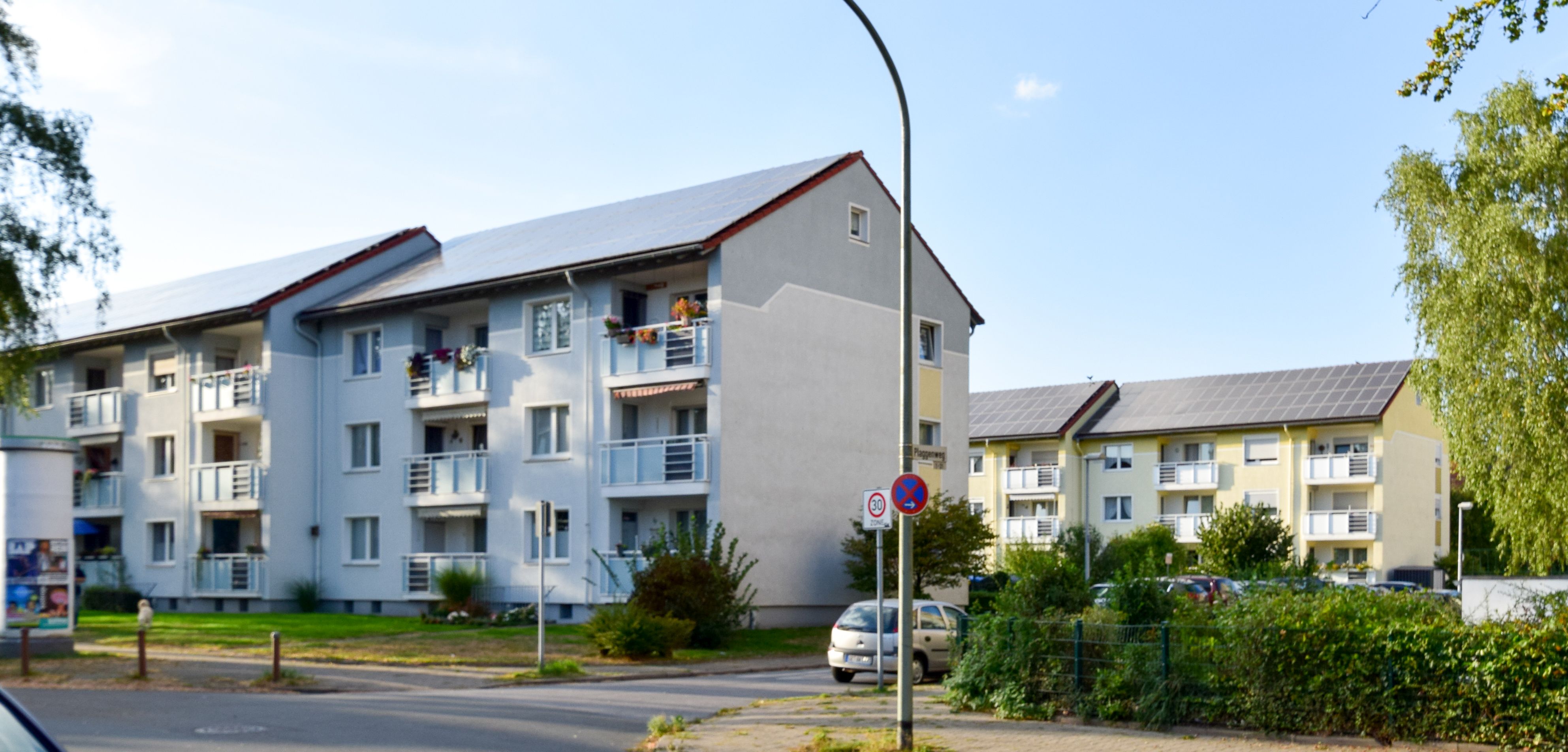 Climate protection and socially just construction and housing must be considered together - Legal regulations in the rental housing sector and state subsidy practice undermine climate goals in the building sector - Deutsche Umwelthilfe and Deutscher Mieterbund present 10-point immediate programme for socially acceptable design of energy modernisation in existing and new buildings - KfW subsidy practice must be subjected to a reality check - Social provisions must be supplemented by climate policy requirements
 The share of renewable energies in electricity consumption rises to almost 43 percent. The climate protection successes in the electricity sector are diminished by rising greenhouse gas emissions in buildings and transport. In parallel, public interest in climate protection is rising: since May 2019, it has consistently been the most pressing political issue in the eyes of the population. This is shown by Agora Energiewende's 2019 annual evaluation.
The illumination of night landscapes by artificial lighting increases globally by about 2 to 6 percent per year, with effects on people and nature. A new guide describes how municipalities can minimize light pollution by making their street and building lighting more efficient. Researchers from the Leibniz Institute of Freshwater Ecology and Inland Fisheries (IGB), the Federal Agency for Nature Conservation (BfN) and the University of Münster have now jointly published the guide on redesigning and retrofitting outdoor lighting.

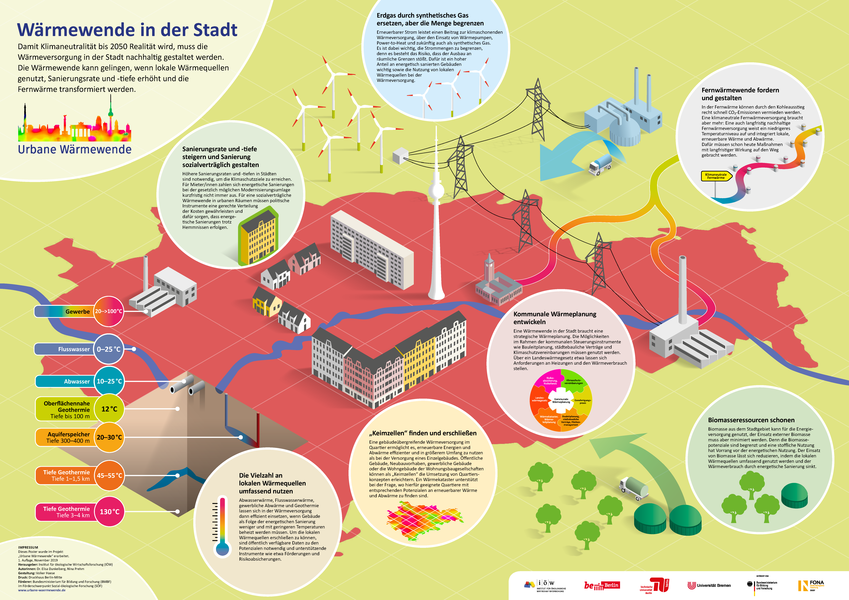 One of the Herculean tasks to achieve the climate targets is to radically reduce CO2 emissions from the heat supply. A group of researchers led by the Institute for Ecological Economy Research (IÖW) shows how cities can turn away from coal, oil and gas in a socially acceptable way. The project "Urban Heat Turnaround" investigated possible contributions from renewable energies and local heat sources in Berlin's urban neighbourhoods. "Waste heat from businesses, heat from waste water or geothermal energy have hardly been used so far.
Discrimination in multi-storey construction has been abolished: The Schleswig-Holstein State Building Code (LBO-SH) was amended by law on 1 October 2019. The amendments came into force at the end of October 2019. On the one hand, the amendment ends the disadvantage of timber construction in multi-storey construction and continues to create the conditions for additional living space under easier conditions. https://informationsdienst-holz.de/...
Almost €1 billion in federal funding for urban development and social integration in neighbourhoods in 2020 The federal and state governments have jointly developed a new structure for urban development funding from 2020: A total of €790 million will be available in three (instead of the previous six) concentrated urban development funding programmes. In addition to the funding requirement of climate change/climate adaptation, new [...]

 ROBIN WOOD has scrutinized the green electricity offers of 1,200 providers and publishes the results today in the "ROBIN WOOD Eco-Electricity Report 2020.". The environmental organization rates eight offers as recommendable. The current research report was realized with the support of the Open Knowledge Foundation Germany.

 The aim of the handbook is to provide municipal actors with concrete tools that can be used to keep and locate production in urban areas. In the joint project UrbaneProduktion.Ruhr, funded by the Federal Ministry of Education and Research, research was carried out from October 2016 to December 2019 into whether and how it is possible to bring production back to the city.
The aim of the EnergiespeicherPLUS programme is to drive forward the expansion of photovoltaics in Berlin and to increase the share of renewable energies in electricity consumption, even in times of low sun and low wind. This benefits climate protection, as CO 2 -emissions can be avoided. The Berlin Energy and Climate Protection Programme provides grants towards the investment costs of electricity storage systems if a photovoltaic system is installed at the same time. The IBB Business Team GmbH is implementing the programme. Since 1 January 2020, an electronic application for funding can now be submitted quickly and easily to the IBB Business Team GmbH under www.energiespeicherplus.de be put.
Shortly after the shutdown of the Swiss old reactor Mühleberg it goes Philippsburg 2 nuclear power plant from the grid on 31.12.2019 as planned. This will be followed in a few months by Fessenheim the two oldest reactors in France. In addition, the 45-year-old nuclear power plant "Ring neck 2" from the grid. Shutting down nuclear reactors significantly reduces the risk of accidents and avoids masses of radioactive nuclear waste and its transport in Castor containers.
Since 17 December 2019, the "Competence Centre for Sustainable Procurement and Contracting" (KNBV) has been supporting municipalities and other public administration bodies in Schleswig-Holstein in taking sustainability into account. In this context, the range of tasks extends from paperless procurement processes and PVC-free office supplies to electric service vehicles including a charging station concept or sustainable services such as plastic-free, fair and regional catering. The KNBV provides advice, information and support for all questions relating to these processes, products or committee and public relations work. Interested municipalities and other public administration bodies will find competent answers for concrete projects as well as a wide range of training courses and events.
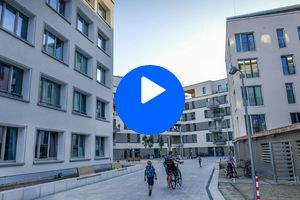
Germany's largest cooperative housing project in Berlin 28:58 min Video available until: 12/02/2020 First broadcast on: 2.12.2019 Living in the metropolis, in a large community, according to its own rules. Central, energy-saving, ecological, cosmopolitan, inclusive. The residents of Möckernkiez in Berlin-Kreuzberg have fulfilled this dream.
For almost fifteen years, Rob Hopkins has been developing a method for preparing our societies for the coming upheavals. Video: 5 min, available from 6.12.2019 to 8.12.2021

